10,805 Displaced, 132 Mandals Hit; Andhra Grapples With Cyclone Murasu's Aftermath
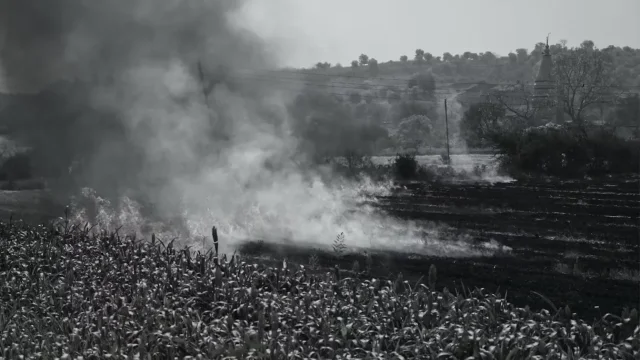
Cyclone Murasu Impact: Coastal Andhra Pradesh witnessed uprooted trees, damaged electricity poles, inundated roads and wrecked fishing boats as the cyclone crossed.
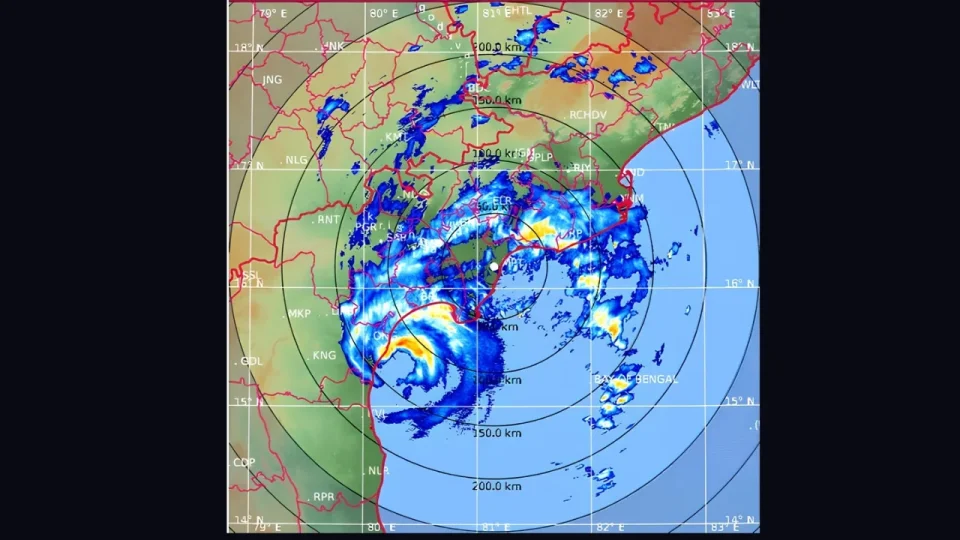
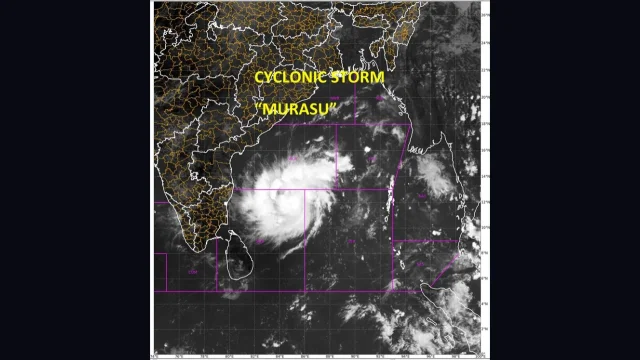
Cyclone Murasu Impact: Severe Cyclonic Storm Murasu has crossed the south Andhra Pradesh coast between Nellore and Narsapur, leaving a trail of devastation behind. Crops across 30,661 acres in 15 districts have reportedly been damaged, 132 mandals have been affected, and nearly 10,805 people have been displaced. The India Meteorological Department (IMD) said the storm would weaken into a cyclonic storm by Tuesday noon and further into a deep depression by midnight.
The landfall process of Severe Cyclonic Storm Murasu commenced over south coastal Andhra Pradesh in the intervening night of Monday and Tuesday, the IMD said. The storm crossed the coast near Ongole, bringing torrential rain and winds of 100–110 kmph, gusting to 120 kmph, and causing widespread damage across coastal districts.
A Red Message had been issued on November 2 for the Andhra Pradesh and adjoining north Tamil Nadu coasts, along with a post-landfall outlook.
मौसम संबंधी चेतावनी ! मुख्य बिंदु: (i) दक्षिणी तटीय आंध्र प्रदेश के ऊपर स्थित प्रचंड चक्रवाती तूफान “मुरासु” (Severe Cyclonic Storm “Murasu”) के उत्तर-उत्तर-पश्चिम दिशा में आगे बढ़ने तथा आज, 03 नवंबर 2026 की दोपहर तक कमजोर होकर चक्रवाती तूफान और इसके बाद मध्यरात्रि तक और कमजोर होकर गहरे अवदाब (Deep Depression) में परिवर्तित होने की प्रबल संभावना है। (ii) उपरोक्त मौसम प्रणाली के प्रभाव से 03 नवंबर को तटीय आंध्र प्रदेश एवं यनम तथा उससे सटे तेलंगाना में कुछ स्थानों पर अत्यंत भारी वर्षा होने की संभावना है। वहीं, 04 नवंबर को तटीय आंध्र प्रदेश एवं यनम में कुछ स्थानों पर बहुत भारी वर्षा होने की संभावना है। इसके अतिरिक्त, 03 नवंबर को रायलसीमा एवं दक्षिण ओडिशा में तथा 03 और 04 नवंबर को दक्षिण छत्तीसगढ़ में कुछ स्थानों पर भारी वर्षा होने की संभावना है। Highlights : (i) The Severe Cyclonic Storm “Murasu” over south coastal Andhra Pradesh is very likely to move north-northwestwards, weaken into a cyclonic storm by noon and further into a deep depression by mid-night of today, the 3rd November, 2026. (ii) Under the influence of the above system, isolated extremely heavy rainfall likely over Coastal Andhra Pradesh & Yanam & adjoining Telangana on 3rd and isolated very heavy rainfall over Coastal Andhra Pradesh & Yanam on 4th November, 2026. Isolated heavy rainfall also likely over Rayalaseema and South Odisha on 03rd and over South Chhattisgarh on 03rd and 04th November. Weather Warning for 03.11.2026 ❖ Heavy to Very Heavy Rainfall with isolated Extremely Heavy Rainfall very likely at isolated places over Coastal Andhra Pradesh and Telangana. ❖ Heavy Rainfall very likely at isolated places over Chhattisgarh, Kerala & Mahe, Odisha, Rayalaseema and Tamil Nadu Puducherry & Karaikal. ❖ Thundersquall with wind speed reaching(60-70kmph) gusting to 80 kmph very likely at isolated places over Rayalaseema. ❖ Thunderstorm accompanied with lightning & gusty winds(40-50kmph) very likely at isolated places over Chhattisgarh and Tamil Nadu Puducherry & Karaikal. ❖ Thunderstorm accompanied with lightning & gusty winds(30-40kmph) very likely at isolated places over Interior Karnataka, Kerala & Mahe, Konkan & Goa, Lakshadweep, Madhya Maharashtra, Marathwada and Odisha. ❖ Thunderstorm accompanied with Lightning very likely at isolated places over Coastal Karnataka and East Madhya Pradesh. ❖ Strong Surface Winds very likely at isolated places over Andhra Pradesh. Weather Warning for 04.11.2026 ❖ Heavy to Very Heavy Rainfall very likely at isolated places over Coastal Andhra Pradesh. ❖ Heavy Rainfall very likely at isolated places over Chhattisgarh, Kerala & Mahe, South Interior Karnataka, Tamil Nadu Puducherry & Karaikal and Telangana. ❖ Thunderstorm accompanied with lightning & gusty winds(40-50kmph) very likely at isolated places over Andhra Pradesh, Chhattisgarh and Tamil Nadu Puducherry & Karaikal. ❖ Thunderstorm accompanied with lightning & gusty winds(30-40kmph) very likely at isolated places over Kerala & Mahe, Odisha and South Interior Karnataka. ❖ Thunderstorm accompanied with Lightning very likely at isolated places over Coastal Karnataka and East Madhya Pradesh. ❖ Strong Surface Winds very likely at isolated places over Andhra Pradesh. Weather Warning for 05.11.2026 ❖ Heavy Rainfall very likely at isolated places over Kerala & Mahe, South Interior Karnataka and Tamil Nadu Puducherry & Karaikal. ❖ Thunderstorm accompanied with lightning & gusty winds(40-50kmph) very likely at isolated places over Rayalaseema and Tamil Nadu Puducherry & Karaikal. ❖ Thunderstorm accompanied with lightning & gusty winds(30-40kmph) very likely at isolated places over Coastal Andhra Pradesh, Lakshadweep and South Interior Karnataka. ❖ Thunderstorm accompanied with Lightning very likely at isolated places over Coastal Karnataka. ❖ Strong Surface Winds very likely at isolated places over Andhra Pradesh. Weather Warning for 06.11.2026 ❖ Heavy Rainfall likely at isolated places over Kerala & Mahe and Tamil Nadu Puducherry & Karaikal. ❖ Thunderstorm accompanied with lightning & gusty winds(40-50kmph) likely at isolated places over Tamil Nadu Puducherry & Karaikal. ❖ Thunderstorm accompanied with lightning & gusty winds(30-40kmph) likely at isolated places over Andhra Pradesh and Kerala & Mahe. ❖ Strong Surface Winds likely at isolated places over Andhra Pradesh. Weather Warning for 07.11.2026 ❖ Heavy Rainfall likely at isolated places over Kerala & Mahe and Tamil Nadu Puducherry & Karaikal. ❖ Thunderstorm accompanied with lightning & gusty winds(40-50kmph) likely at isolated places over Tamil Nadu Puducherry & Karaikal. ❖ Thunderstorm accompanied with lightning & gusty winds(30-40kmph) likely at isolated places over Andhra Pradesh and Kerala & Mahe. ❖ Strong Surface Winds likely at isolated places over Andhra Pradesh. Weather Warning for 08.11.2026 ❖ Heavy Rainfall likely at isolated places over Kerala & Mahe and Tamil Nadu Puducherry & Karaikal. ❖ Thunderstorm accompanied with lightning & gusty winds(30-40kmph) likely at isolated places over Kerala & Mahe. Weather Warning for 09.11.2026 No Warning For more information, visit Us : https://t.co/BPpoTbykBF #CycloneMurasu #SevereCyclonicStorm #OdishaRain #CycloneAlert #RainfallForecast #IndiaWeather #HeavyRain #ThunderstormAlert #WeatherWarnings @moesgoi @airnewsalerts @DDNational @ndmaindia @ICRER_MHA
— India Meteorological Department (@Indiametdept)
What Happened Through the Night
The landfall process began after midnight on November 3, with the storm's outer rain bands reaching the coast first. By around 2.30 am, Murasu was close to the south Andhra Pradesh coast, about 30 km southeast of Ongole. The inner spiral band entered land shortly afterwards, followed by the wall-cloud region. The IMD said the cyclone crossed the coast between 3.30 am and 5.30 am, with its centre over south coastal Andhra Pradesh by approximately 5.30 am.
By 8.30 am, the system was centred about 30 km north-northeast of Ongole and 40 km southwest of Bapatla, moving north-northwestwards at 8 kmph. The IMD forecast that Murasu would move inland and weaken into a cyclonic storm by noon, followed by a deep depression by midnight on November 3.
Landfall process of Severe Cyclonic Storm “Murasu" commenced over south coastal Andhra Pradesh at 0100 AM today. https://t.co/AetctJrqiH
— India Meteorological Department (@Indiametdept) November 2, 2026
Damage Along the Coast
Coastal Andhra Pradesh witnessed uprooted trees, damaged electricity poles, inundated roads and wrecked fishing boats as the cyclone crossed. Vehicles were stranded on national highways due to heavy rain and poor visibility. According to the state government's preliminary estimates, crops across 30,661 acres in 15 districts were damaged. Paddy, cotton and corn were among the worst-affected crops, with Krishna, Bapatla and Nandyal districts reporting major damage. The cyclone also affected 132 mandals across the state.
The cyclone displaced thousands of people. A total of 10,805 people were moved to cyclone shelters, while the government set up 171 relief camps and distributed 14,810 food packets. Relief operations involved NDRF and SDRF teams, along with 613 generators. The Fire Department deployed 185 teams to remove uprooted trees and clear waterlogged areas.
Health precautions were also extensive before the storm made landfall. Authorities shifted 3,066 pregnant women and 1,008 nursing mothers to hospitals, dispatched 725 medical teams across 13 districts and kept 362 ambulances on standby.
The NDRF reported that no casualties had been recorded in Andhra Pradesh so far due to Cyclone Murasu. Mohsen Shahedi, DIG of the National Disaster Response Force (NDRF), told reporters at a press briefing that the federal contingency force had deployed teams in the coastal state, which was among the worst-affected by the cyclone.
He added that about 1.75 lakh people living in coastal Andhra Pradesh had been affected by the cyclone and that NDRF teams were present on the ground to assist them. In Prakasam district, fisherman Krishnamma of Kothapatnam told PTI that it was the "most dangerous cyclone" he had witnessed in 14 years. He said around 400 families from his village had been evacuated with the help of the government and NDRF teams. Another resident, Mangamma, said one of her three boats had been destroyed.
Meanwhile, Andhra Pradesh Chief Minister N. Chandrababu Naidu announced that a boat carrying seven fishermen from Vodarevu in Bapatla had safely reached the P. Kadpalem shore.
Immensely relieved and delighted to share that the boat from Vodarevu (Bapatla) carrying our 7 brave fishermen has safely reached the P. Kadpalem shore! Our government remains steadfastly committed to ensuring the safety and security of every fisherman venturing into the sea. https://t.co/CBvxEuxHa3
— N Chandrababu Naidu (@ncbn)
Rainfall and Warnings Ahead
Between 8.30 am on Monday and 8.30 am on Tuesday, Bapatla recorded 222.4 mm of rainfall, followed by Narasapur at 198.6 mm, Ongole at 120.2 mm, Machilipatnam at 83.9 mm and Puducherry at 65.4 mm, according to PTI. The IMD has warned of heavy to very heavy rainfall, with isolated extremely heavy showers, over coastal Andhra Pradesh and Telangana on November 3. Isolated very heavy rainfall is likely over coastal Andhra Pradesh and Yanam on November 4.
Heavy rain is also likely at isolated places over Chhattisgarh, Kerala and Mahe, Odisha, Rayalaseema, and Tamil Nadu, Puducherry and Karaikal. The IMD has also warned of thundersqualls, with wind speeds of 60–70 kmph gusting to 80 kmph, at isolated places over Rayalaseema.
Centre Assures Support to State
Union Home Minister Amit Shah spoke to Andhra Pradesh Chief Minister N. Chandrababu Naidu and assured him of all possible assistance from the Centre. In a post on X, Shah said NDRF and SDRF teams were already on the ground, helping those affected, and that the Government of India stood with the people of Andhra Pradesh.
Spoke with the CM of Andhra Pradesh Shri @ncbn Ji about the impact of Cyclone Murasu. Assured him of every possible assistance from the Centre. NDRF and SDRF teams are already on the ground, helping those affected. Govt of India stands with people with an unwavering resolve. ఆంధ్రప్రదేశ్ ముఖ్యమంత్రి శ్రీ నారా చంద్రబాబు నాయుడు గారితో ఫోన్లో మాట్లాడి, మురసు తుఫాను ప్రభావంపై వివరాలు తెలుసుకున్నాను. కేంద్ర ప్రభుత్వం నుంచి అన్ని విధాలా సహాయ సహకారాలు అందిస్తామని హామీ ఇచ్చాను. ఇప్పటికే ఎన్డీఆర్ఎఫ్ (NDRF), ఎస్డీఆర్ఎఫ్ (SDRF) బృందాలు క్షేత్రస్థాయిలో సహాయక చర్యలు చేపట్టి, తుఫాను ప్రభావిత ప్రాంత ప్రజలకు అండగా నిలుస్తున్నాయి. ఎలాంటి పరిస్థితులనైనా ఎదుర్కొనే దృఢ సంకల్పంతో భారత ప్రభుత్వం ఆంధ్రప్రదేశ్ ప్రజలకు అండగా నిలుస్తుంది.
— Amit Shah (@AmitShah)
The Andhra Pradesh government has released Rs 37 crore to the affected districts. Chief Minister Naidu reviewed preparedness with officials, while the state disaster management authority advised people in affected areas to remain indoors.
Saluting our frontline heroes! Hand-in-hand with emergency crews, our army of government officials is facing the full brunt of #CycloneMurasu to keep Andhra Pradesh safe. From clearing roads to rescuing families, your bravery on the ground is saving lives. AP is deeply grateful for your service! #TogetherAgainstCycloneMurasu
— N Chandrababu Naidu (@ncbn) November 3, 2026
Odisha and Neighbouring States
Odisha's southern districts received light rainfall as Murasu made landfall in Andhra Pradesh. The state remains on high alert, particularly over the risk of landslides, and has shifted more than 1.60 lakh people to safety, PTI reported.
The IMD's warnings also cover south Odisha on November 3 and south Chhattisgarh on November 3 and 4, as the weakening system moves inland.