Ukraine's Rare Local Ceasefire Brings Hundreds to Safety, But War Rages On
A rare six-day ceasefire brokered by Melania Trump allows hundreds to evacuate Russian-occupied Oleshky, though massive airstrikes leave thousands without power elsewhere.
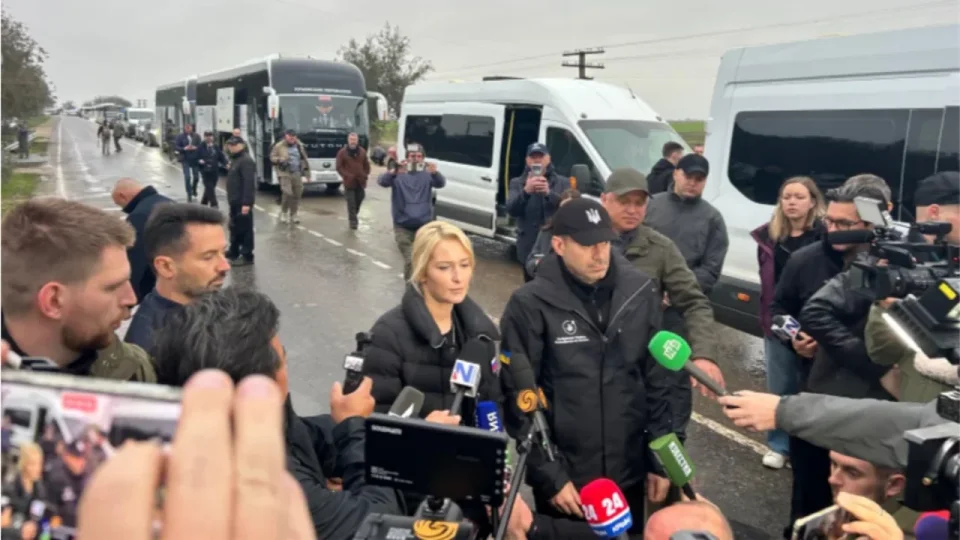
Residents of the Russian-occupied Ukrainian city of Oleshky have crossed into Ukrainian-held territory after a rare local ceasefire allowed a humanitarian convoy to deliver aid and evacuate civilians. The evacuees arrived at Ukraine’s border with Belarus on Saturday, October 31, where they were reunited with relatives after they travelled by bus and plane through Russia and Belarus.
The operation followed a six-day truce in Ukraine’s southern Kherson region that began on Tuesday (October 27) and was expected to last until today (November 1) evening. It is the most significant pause in the war since Russia launched its full-scale invasion of Ukraine in February 2022; the White House said US First Lady Melania Trump helped broker the localised deal.
OUR PRIORITY: SAVING LIVES The convoy is prepared to safely evacuate over 750 people who voluntarily choose to leave Oleshky. It includes 25 buses, 50 medical professionals, and ambulances. All elements of the convoy, including the safe passageway in and out of Oleshky, was established through mutual agreement between Russian and Ukrainian leaders.
— First Lady Melania Trump (@FLOTUS)
Why Oleshky Needed Rescuing
Before Russia’s full-scale invasion, Oleshky was home to about 24,000 people. The city went under Russian occupation since the beginning of the war, constantly deteriorating life there. People faced repeated shelling and drone attacks, roads littered with mines, and the devastating collapse of the Kakhovka Dam in 2023, which left many residents without electricity, heating, running water, food, or medicine.
By the time the truce began, an estimated 2,000 people remained in Oleshky. Under the agreement, they could evacuate to Ukrainian-controlled territory, travel to Russian-held areas, or stay in the city and receive replenished food and medical supplies, AP reported.
Ukraine’s Parliament Commissioner for Human Rights, or Ombudsman, Dmytro Lubinets, posted the footage of evacuees.
We are in Oleshky! The Ukrainian delegation has safely reached the city. The ceasefire has been in effect for 80 hours and remains in place. I am currently on the ground, speaking with local residents to hear about their needs and understand what kind of assistance they need most. I will share more details later. This work is being carried out in accordance with the agreements reached with Russia’s Commissioner for Human Rights, Yana Lantratova, with the support and coordination of U.S. First Lady Melania Trump @FLOTUS
— Dmytro Lubinets (@lubinetzs) October 30, 2026
He also informed that the routes into the city were demined, meaning cleared all the mines laid on the path, before a convoy of 25 buses, ambulances and other vehicles entered Oleshky. He further described the mission as unprecedented and said it could become a model for future humanitarian operations.
❗️The moment we had all been waiting for: residents of Oleshky have crossed the border — the humanitarian mission has been successfully completed! This mission was made possible with the assistance and coordination of U.S. @FLOTUS. I would like to thank the First Lady for her humanity, her attention to this issue, her extraordinary compassion, and her personal involvement in every stage of the process. This entire mission was successfully carried out thanks to her involvement. 🤝 My sincere gratitude goes to the President of Ukraine, @ZelenskyyUa, for his personal support of this humanitarian initiative. His attention to the situation in Oleshky and his assistance at the highest level of government were essential to making this humanitarian mission possible. I am also grateful to David Arakhamia for his important role in this humanitarian mission and his support throughout the process. The mission was made possible through the agreement reached with @yana_lantratova, the Commissioner for Human Rights in the Russian Federation. ❗️ We have come a long way — from negotiations and securing the agreement on a ceasefire to delivering humanitarian aid directly to Oleshky and organizing the departure of residents. The ceasefire will remain in effect until November 1, 10:59 p.m. This is the longest ceasefire observed by both sides since 2022. I thank the Ukrainian Defense Forces for their responsible adherence to the ceasefire, which made it possible to carry out this humanitarian mission! It seems that there is hardly anyone who has not been following this unprecedented and historic event. Behind every stage of this operation are the lives of people who have been waiting and hoping. ℹ️ The oldest evacuee is 94 years old, while the youngest is just over one year old! Another woman will celebrate her 49th birthday tomorrow! Let me tell you about one family who were literally fighting for survival in a shell-damaged apartment building in Oleshky. Due to his health condition, the father was unable to make his way down from the eighth floor on his own, as the staircases had been destroyed. It is frightening even to imagine the conditions in which these people were living: they were effectively cut off from access to food and water. But that is now behind them — the family is safe. 👉 There is another story that is equally heartbreaking. A man born in Oleshky survived 16 attacks by Russian drones and four missile strikes on his own home. One of the explosions occurred just one meter from the wall of his house. Along with the residents, we also managed to evacuate their beloved pets: dogs, cats, a parrot, and even a raccoon! The ordeal and uncertainty are behind them. What lies ahead is the chance to recover and finally breathe a sigh of relief after living in constant fear for their lives. ❗️We want the experience of Oleshky to be more than an isolated case. It could become the foundation for a new mechanism for responding to complex humanitarian crises.
— Dmytro Lubinets (@lubinetzs) October 31, 2026
A Long and Difficult Journey
The journey to Ukraine was not that easy. The evacuees, hoping to reach Ukrainian-held territory, were first taken to Anapa in southern Russia, then flew to Belarus before crossing into Ukraine’s northern Chernihiv region. Ukrainian authorities restricted details of the route, saying this was necessary to protect residents who remained and safeguard future humanitarian missions.
At the border, volunteers from the Red Cross, Doctors Without Borders and World Central Kitchen provided food and assistance. Crews also unloaded pets, including dogs, cats, a parrot and a raccoon, while residents of nearby villages lined the road to welcome the convoy.
Neither Ukraine nor Russia has given a final confirmed total for the number of people evacuated. However, Melania Trump said the convoy was prepared to safely evacuate “more than 750 people who chose voluntarily to leave.”
Officials Hail ‘Historic’ Mission
Completing the long journey, the evacuees reached home. Ukrainian President Volodymyr Zelenskyy confirmed that Ukrainian citizens from Oleshky had crossed the border in the Chernihiv region and said they would receive the assistance needed to adapt. In a post on X, he thanked the US side, Melania Trump, Ukraine’s armed forces and Lubinets’s team.
A humanitarian operation to rescue people in Oleshky, in the Kherson region, has taken place. A ceasefire was established in the Kherson sector, during which roads to Oleshky were cleared of mines and humanitarian aid was delivered. We hope humanitarian access to Oleshky will remain open. Also, people who needed evacuation have been taken out of the city and the surrounding community. As of now, Ukrainian citizens from Oleshky have crossed the Ukrainian border in the Chernihiv region. All of them will receive the assistance they need. It is important that government agencies and all the regional and local authorities involved work effectively and help our people adapt. I thank the American side and U.S. First Lady Melania Trump for their mediation. I am proud of our Defense Forces of Ukraine, who defend our country and honorably ensured the security conditions for this humanitarian operation. I thank Ukraine’s Human Rights Ombudsman, Dmytro Lubinets, and his team for carrying out this mission. And I thank everyone around the world – every journalist, every political and civic leader, and every concerned person – who helped draw global attention to the situation in Oleshky and the true humanitarian catastrophe in Ukrainian territory temporarily occupied by Russia. When the world pays attention, people are rescued. Further steps toward de-escalation and real progress toward peace are also needed. Glory to Ukraine!
— Volodymyr Zelenskyy / Володимир Зеленський (@ZelenskyyUa)
Yana Lantratova, Russia’s Commissioner for Human Rights, said residents who chose Russian-held territory had been taken to a temporary accommodation centre in Simferopol, in Crimea, which Russia annexed in 2014, reported AP. She said living conditions in Oleshky remained extremely difficult and pledged continued support for residents who stayed.
Residents who left Oleshky have been welcomed at a temporary accommodation centre in Simferopol, with rooms, hot meals, and support from medical staff, psychologists, and volunteers. Our office will continue helping with documents, medical care and longer-term arrangements. The evacuees need to know they have people they can count on. We carried out the humanitarian mission jointly with Ukraine’s Parliamentary Commissioner for Human Rights, Dmytro Lubinets.
— Яна Лантратова (@yana_lantratova)
Lubinets said the oldest evacuee was 94 and the youngest just over a year old. He also said pets had been evacuated and urged that the Oleshky operation become the basis for a broader mechanism to respond to humanitarian crises.
Does War Continue Elsewhere?
It may appear that the local truce did not halt the wider war. In his most recent post, published on X on Sunday, November 1, Zelenskyy said Russian attacks had hit energy infrastructure in four regions overnight, Dnipro, Vinnytsia, Zhytomyr and Khmelnytskyi, targeting substations, transformers and power lines. He said hundreds of thousands of families remained without electricity and that repair crews were working across the affected areas.
Zelenskyy expressed in the post that Russia had launched 1,940 attack drones, more than 1,580 guided aerial bombs and 44 missiles against Ukraine over the past week, including 36 ballistic missiles. He further urged the United States and European partners to speed up air-defence deliveries, particularly Patriot systems, saying Russia was “betting on ballistic missiles this winter.”
Overnight alone, our energy infrastructure came under Russian attack in four regions: Dnipro, Vinnytsia, Zhytomyr, and Khmelnytskyi. Substations, transformers, and power lines that supply electricity to our people’s homes were targeted. Repair crews are working everywhere. As of now, hundreds of thousands of families remain without power. Massive Russian attacks on Ukraine’s other critical infrastructure are also continuing unabated. This past week Russia has launched 1,940 attack drones, more than 1,580 guided aerial bombs, and 44 missiles of various types against Ukraine, including 36 ballistic missiles. The intensity of the strikes is extremely high, and the Russians are trying to take maximum advantage of the shortage of ballistic missile interceptors. Every day, we communicate our need for Patriot missiles to America, Europe, and other partners who can help. And this month, the United States and European countries made new decisions on additional packages for Ukraine. But these deliveries cannot take years. Russia is destroying infrastructure and killing our people right now, and it is betting on ballistic missiles this winter. Accordingly, decisions on air defense must also be implemented now. I thank everyone who supports the defense of Ukrainian skies.
— Volodymyr Zelenskyy / Володимир Зеленський (@ZelenskyyUa)
Earlier, Zelenskyy welcomed US approval for Ukraine to purchase 500 PAC-3 Patriot interceptors in a proposed $2.1 billion sale, which remains subject to congressional review. He said Russia had launched more than 30 strikes on critical parts of Ukraine’s power grid in the previous two weeks of October.
Meanwhile, a Ukrainian drone attack killed two people and injured five in Russia’s western Bryansk region, according to local governor Yegor Kovalchuk. Russia’s Defence Ministry said its forces shot down 433 Ukrainian drones overnight.