India Corridor, Ganges Treaty: Issues Stir Political Debate in Bangladesh
NCP's Nahid Islam demands to protect Bangladesh's share of Ganges water by renewal of Ganges Treaty with New Delhi, toexpire in December; leads protest demanding resignation of HM
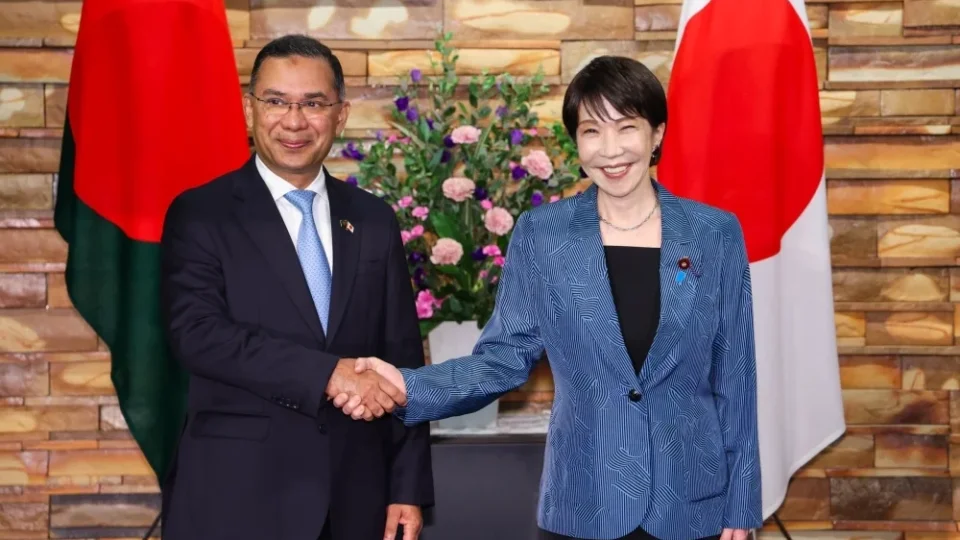
Nahid Islam, convener of the National Citizen Party (NCP), Bangladesh’s Opposition Party, issued the warnings at a Dhaka rally on Friday (October 30) against any attempt to facilitate an Indian transit corridor through the country. He further pressed for a fair renewal of the Ganges water-sharing treaty with New Delhi, which expires in December. In the same rally, attended by hundreds of party supporters, the leader reportedly threatened with street protests if Bangladesh’s share of the river’s waters was not protected.
"This time we will not give up even a single bit of our fair share in the Ganga Water Treaty," he said, according to Bangladesh’ English daily bdnews24.
The rally was primarily called to demand the resignation of Home Minister Salahuddin Ahmed and Power, Energy and Mineral Resources Minister Iqbal Hassan Mahmood Tuku over their alleged failure to maintain law and order as well as to address the issue of gas and electricity shortages. It came days after Prime Minister Tarique Rahman returned from a four-day official visit to Japan, during which both sides agreed to upgrade their Bay of Bengal Industrial Growth Belt (BIG-B) initiative into a broader strategic cooperation framework.
Unstoppable. Our fight continues until all 4 demands, including the resignation of the Home Minister, are met. InshaAllah! https://t.co/vSJsUf4n46
— Nahid Islam (@NahidIslam_24) October 30, 2026
‘No Illegal Corridor’
At the rally, the NCP leader accused Prime Minister Tarique Rahman’s government of also seeking to facilitate an Indian transit corridor through Bangladesh. He also warned that his party would launch fresh protests if the Ganges water-sharing agreement was not renewed on terms that safeguarded Bangladesh’s share of the river’s waters, reported news agency PTI, citing Bangladeshi newspaper Prothom Alo and the bdnews24 news website.
Nahid said, “Japan is trying to create a corridor through Bangladesh once again. The government is trying to hand over the illegal corridor to India. Prime Minister Tarique Rahman, we want to say clearly that the people of Bangladesh will not accept any such illegal corridor,” as reported by bdnews24.
The NCP was established in February 2025 by figures from the student-led movement that led the July-August 2024 protests, which resulted in the removal of then prime minister Sheikh Hasina.
The people of Dhaka stood united, demanding the immediate resignation of the Home Affairs and Energy Ministers and the swift implementation of our four key demands. Change is coming. Inshallah, the people of Dhaka will soon be freed from the grip of terrorism, extortion, illegal occupation, and corrupt syndicates. #Bangladesh #NCP #Dhaka
— Nahid Islam (@NahidIslam_24) October 30, 2026
What Dhaka and Tokyo Agreed Upon
Rahman travelled to Japan between October 26 and 29. During the trip, the two countries agreed to transform the BIG-B initiative into a new strategic cooperation framework centred on improving connectivity, building resilience against natural disasters and geopolitical risks, encouraging public-private partnerships to drive economic growth, and cooperating on peace and stability.
They further committed to working towards turning the Bay of Bengal region, positioned around Bangladesh as its hub, into an area of shared prosperity. Separately, Japan’s development agency, Japan International Cooperation Agency (JICA), to finance the development of the Matarbari deep-sea port in southeastern Bangladesh.
Japanese officials have earlier set out a wider regional connectivity plan built around the port, envisioning an industrial value chain that would connect India’s northeastern states with the Bay of Bengal and Southeast Asia via Bangladesh.
My historic visit to Japan marks an important step forward in strengthening the longstanding friendship and strategic partnership between Bangladesh and Japan. Bangladesh and Japan share a longstanding friendship built on mutual respect and trust. My father, Shaheed President Ziaur Rahman, helped lay the foundations of this relationship. My late mother, Prime Minister Begum Khaleda Zia, built on that foundation and further strengthened our ties through her visits and engagement with Japan. Today, I had a highly productive summit meeting with Prime Minister @takaichi_sanae, where we reaffirmed our shared commitment to democracy, the rule of law, economic development, and a peaceful, stable and prosperous Indo-Pacific. Our discussions focused on translating this partnership into tangible opportunities for the people of Bangladesh. We explored emergency financial assistance of JPY 50 billion (approximately USD 320 million) under Japan’s Partnership for Power Asia initiative to strengthen Bangladesh’s energy security. We also held encouraging discussions on the potential for up to JPY 1 trillion (approximately USD 6.3 billion) in Japanese private-sector investment over the next five years, with the prospect of creating around 200,000 jobs in Bangladesh. These investments could accelerate industrialisation, expand manufacturing capacity, and create new opportunities for our young workforce. I proposed establishing a Bangladesh–Japan Tech Park to advance cooperation in artificial intelligence, cloud computing, robotics, electronics manufacturing, and advanced technologies. We also discussed cooperation in space science and satellite engineering, alongside Japanese technical and financial support for high-speed rail connectivity linking six major divisional cities and the development of modern transport infrastructure. A significant outcome of our summit was our shared commitment to advance the Bay of Bengal Industrial Growth Belt (BIG-B) initiative into a new framework for shared prosperity. This renewed cooperation will focus on integrated development of energy, deep-sea ports, industrial infrastructure, technology, and regional connectivity, strengthening Bangladesh’s position as a bridge between South and Southeast Asia. We also discussed the early implementation of the Bangladesh–Japan Economic Partnership Agreement, stronger institutional cooperation, and the proposed establishment of a ministerial-level joint commission to translate our shared priorities into concrete results. I expressed Bangladesh’s appreciation for Japan’s continued humanitarian assistance to the Rohingya population and called for its sustained engagement in securing their voluntary, safe, dignified and sustainable return to Myanmar. Japan was among the first countries to recognise Bangladesh’s independence and has remained a trusted development partner throughout our journey. I conveyed the sincere gratitude of the people of Bangladesh for Japan’s friendship, generosity, and longstanding support. As Bangladesh moves forward following democratic elections, my government is determined to build an economy driven by investment, innovation, infrastructure development, and meaningful employment opportunities. On behalf of the people and the Government of Bangladesh, I thank Prime Minister Sanae Takaichi, the Government of Japan, and the Japanese people for their warm hospitality and continued confidence in Bangladesh. Let's deepen the multifaceted ties between Bangladesh and Japan for a stronger, much better, and more prosperous future together.
— Tarique Rahman (@trahmanbnp) October 27, 2026
Bangladesh Minister’s Denial on Third-Country Talks with PM of Japan
“We made it very clear… no third country reference. We didn’t go there to discuss the Bay of Bengal because the Bay of Bengal doesn’t belong to us only,” Humaiun Kobir, Bangladesh’s State Minister for Foreign Affairs, said on Friday, according to Dhaka Tribune. Thus, Kobir refused any discussions surrounding third-world countries during Rahman’s Japan visit.
He further said that the discussions focused on the economic partnership between Bangladesh and Japan. He added that if matters involving other countries had to be discussed, representatives of those countries would need to be present at the table, the UNB news agency reported.
India Highlights Japan Ties
On October 28, shortly after Bangladesh Prime Minister Rahman and Japanese Prime Minister Sanae Takaichi agreed to deepen regional connectivity and signed agreements for further Japanese support for Bangladesh’s Matarbari deep-sea port, India said it intended to reinforce its partnership with Japan, including through initiatives connected to its northeastern states.
“We have a very strong partnership with Japan. We also have several initiatives involving northeast [India] and Japan, and we would like to further strengthen these linkages,” Ministry of External Affairs (MEA) spokesperson Randhir Jaiswal said in New Delhi.
Ganges Treaty Deadline
The upcoming expiration of the Ganges water-sharing treaty on December 12 was another critical, India-related matter brought up by Nahid. He cautioned that if a fair renewal of the agreement is not reached, citizens of Bangladesh would resort to public street protests.
Originally signed on December 12, 1996, this 30-year pact regulates how India and Bangladesh divide the Ganges waters at West Bengal's Farakka Barrage during the lean period spanning January to May. Bangladesh is currently pushing for a revised or completely new long-term accord that includes a specific guarantee clause to safeguard its water allocation throughout the dry months.
According to India, all deliberations regarding water distribution and other matters linked to their 54 shared rivers are handled by the bilateral Joint Rivers Commission (JRC), which was set up in 1972 to manage common, border, and transboundary river concerns of mutual interest. Additionally, MEA spokesperson Jaiswal reportedly confirmed this past September that technical-level discussions concerning the Ganges Water-Sharing Treaty were still ongoing.