One Glacial Lake, Two Indian States on Alert: The Threat From Bhutan’s Floodwaters
Bhutan Flash Flood Glacial Lake Outburst: Bhutan’s glacial lake outburst trigger flash flood alerts in West Bengal and Assam, forcing 10,000+ evacuations along the rising Sankosh River as disaster teams deploy on red alert
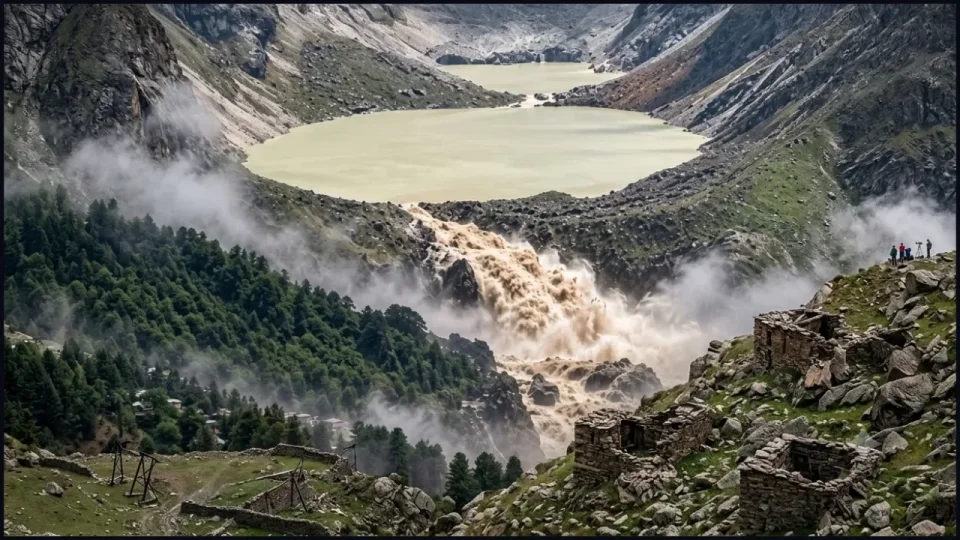
Bhutan Flash Flood Glacial Lake Outburst: A glacial lake outburst flood (GLOF) in Bhutan early Friday (October 30) triggered downstream flash floods and put parts of West Bengal and Assam on Red-Alert, raising fears of a sudden rise in the Sankosh River. More than 10,000 people in West Bengal have been reportedly moved to relief shelters and safer locations, while Assam’s Dhubri district has stepped up preparedness for possible downstream impact.
The outburst sent large volumes of water through the Mo (Mofu) River toward the Sankosh River system, damaging infrastructure at Bhutan’s Gasa Tshachu hot springs, though no injuries or deaths have been reported as of now, said the state broadcaster Bhutan Broadcasting Service (BBS). It said the full extent of damage was still unclear because assessment was hampered by “darkness and the strong flow” of floodwaters. Two Bailey bridges may also have been washed away. The area around the hot springs had been evacuated before the floodwaters arrived, and the road has been closed to traffic indefinitely. Bhutan’s national newspaper Kuensel reported that the late-night flood washed away parts of the road leading to Laya village, where the hot springs are located, making the route impassable.
Red Alert in North Bengal
West Bengal authorities have alerted residents along the Sankosh River and its tributaries, with people in the Darjeeling hills, Terai and Dooars advised to remain vigilant and move to safer ground if they live in vulnerable areas, said DD News. A red alert is in force for the Sankosh River system, Alipurduar Superintendent of Police Amit Kumar Shaw said, warning that the approaching water could carry dead fish and debris, including large pieces of wood and concrete.
“We expect to see water flowing through the Sankosh River, likely accompanied by dead fish, as well as large pieces of wood and concrete debris,” Shaw told news agency ANI.
State minister Nisith Pramanik said the overflowing water was moving towards the Sankosh through the Mo Chhu and was expected to reach the plains within five to six hours. “Residents living along the Sankosh River and its tributaries have been alerted. They are advised to move to a safe distance immediately to ensure their safety,” he said. He added that the State Disaster Management Team had been activated, the NDRF notified, and disaster-management volunteers instructed to remain on site.
BJP MP from Darjeeling Raju Bista also urged residents in the river’s catchment areas to move to safety. “A glacial lake outburst flood (GLOF) has been reported at Lemthang in Bhutan. The overflowing water from the lake is flowing downwards through the Mofu River towards the Sunkosh River,” he posted on X.
A glacial lake outburst flood (GLOF) has been reported at Lemthang in Bhutan. The overflowing water from the lake is flowing downwards through the Mofu River towards the Sunkosh River. Therefore, everyone living in the catchment areas of the Sunkosh River and all its connected tributaries have been informed to move to a safe distance immediately to protect their lives. Everyone in our Darjeeling hills, Terai and Dooars region are requested to stay alert.
— Raju Bista (@RajuBistaBJP) October 29, 2026
Thousands Evacuated
In Alipurduar, Shaw said around 4,000 to 5,000 people had been moved into shelters, with school buildings used as relief centres, while more than 6,000 others had been relocated to safe areas. He said the administration was coordinating with Bhutanese authorities and disaster-response agencies, and asked residents not to panic.
The IMD has also forecast Light to moderate and Light Rains/Thundershow Very Likely to occur at many places in Alipurduar for the next five days, which could further complicate the situation.
“The situation is currently under control. We are in constant touch with the authorities in Bhutan. Our police team, the District Magistrate (DM) and the Block Development Officer (BDO) with their respective teams, along with all relevant agencies and stakeholders, are working together in close coordination,” Shaw told ANI.
The SDRF has been deployed in the area, an NDRF team is on its way, and Civil Defence personnel have been mobilised. Shaw said dry food, drinking water, toilet facilities and other necessities had been arranged, adding that the administration would assess the situation again in two hours while remaining prepared for any emergency.
Assam on Vigil
Assam’s Dhubri district, through which the Sankosh flows, has been placed on alert over possible downstream effects. “The situation arising out of the Glacial Lake Outburst Flood in Bhutan is being closely monitored by HCM Dr @himantabiswa,” the Chief Minister’s Office said in a social-media post, adding that the Dhubri district administration was on the ground and prepared to deal with downstream effects.
We are closely monitoring the possible impact of the glacial lake outburst in Bhutan across all vulnerable revenue circles of Dhubri and Kokrajhar. Our teams are also in constant contact with the NDRF and other agencies, and are ready to respond if needed. Residents are requested to stay alert, follow official updates and cooperate with local officials.
— Himanta Biswa Sarma (@himantabiswa) October 30, 2026
An Assam State Disaster Management Authority spokesperson said the Sankosh’s water level was steady as of 6.30 am on Friday, with district authorities and response teams on alert.
A special advisory issued by the Ministry of Jal Shakti on Thursday for Assam and West Bengal said the Indian Embassy had reported a GLOF in Shintaphu Lake, in Bhutan’s Punatsangchhu river basin. It warned that water levels in the Sankosh could rise suddenly in Dhubri in Assam and Alipurduar in West Bengal, and advised local authorities to monitor the situation and take precautionary measures.
A Recurring Himalayan Risk
A GLOF occurs when the natural dam holding back a glacial lake fails or is breached, releasing large volumes of water downstream. Such floods can suddenly destroy roads, bridges, settlements and other infrastructure, particularly in mountainous regions.
Shintaphu Lake, located below Wakila Mountain in Lungo, Laya Gewog, in Bhutan’s Gasa district, is among 17 glacial lakes in the country identified as potentially dangerous, according to local reports. Gasa Tshachu was also hit by a flash flood in 2021, when the Mo Chhu changed course and swept through the area.
The latest incident has renewed concerns over GLOF risks across the Himalayan region. In August, a flash flood near Nepal’s border with China killed more than 1,500 people and left over 5,000 missing, according to the supplied report.