Why Has UNESCO Recognised India’s Volcano Sites?
India has added three sites to UNESCO’s World Heritage Tentative List: the Karst-Mud-Volcano Complex of Baratang, the Andaman Subduction Volcanoes and the Sirpur Cultural and Archaeological Landscape in Chhattisgarh.
When people think of UNESCO World Heritage Sites, monuments, ancient temples, forts and archaeological ruins often come to mind. However, the organisation’s definition of heritage extends beyond places shaped by human civilisation. Natural landscapes can also qualify because of their geological significance, ecological value and importance in understanding Earth’s history. This is the distinction behind India’s latest additions to UNESCO’s World Heritage Tentative List.
Three Indian sites have been added to the list: the Karst-Mud-Volcano Complex of Baratang, the Andaman Subduction Volcanoes and the Sirpur Cultural and Archaeological Landscape in Chhattisgarh. The first two are geological sites located in the Andaman and Nicobar Islands, while the third is a cultural and archaeological site.
What Makes India’s Volcano Sites Significant?
The Karst-Mud-Volcano Complex of Baratang combines limestone caves with mud volcanoes. Unlike conventional volcanoes, which erupt molten rock, mud volcanoes release mud, water and gases from underground. These formations provide opportunities to study geological processes and understand how landscapes evolve over time.
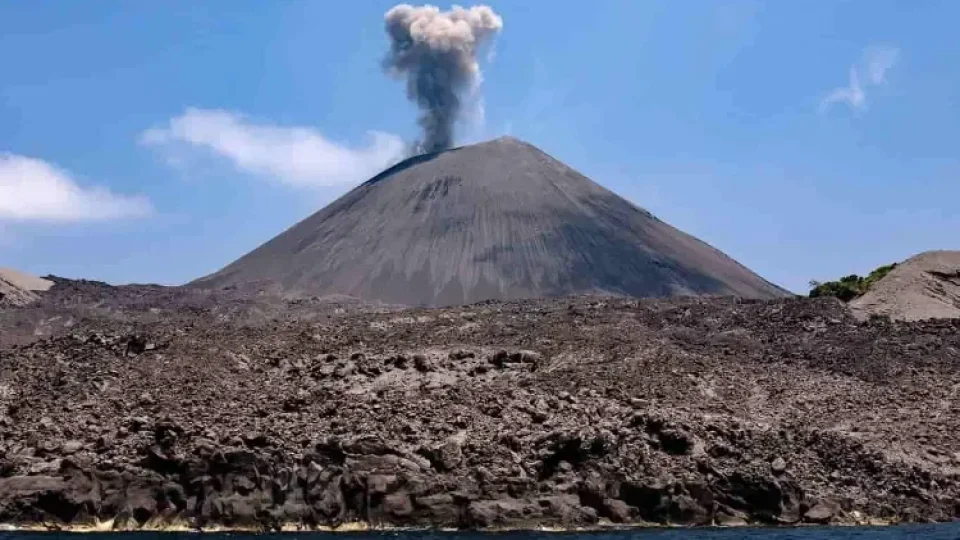
The Andaman Subduction Volcanoes comprise Barren Island and Narcondam Island. Barren Island is home to India’s only confirmed active volcano, while Narcondam is a forested volcanic island with a distinctive ecosystem. These islands offer insights into volcanic activity, the geological evolution of island chains and the development of ecosystems in isolated environments. How does a natural site qualify as UNESCO heritage?
UNESCO’s World Heritage framework covers both cultural and natural heritage. Cultural sites may be recognised for their architecture, historical importance or contribution to human civilisation. Natural sites, meanwhile, can qualify because of exceptional geological formations, significant ongoing natural processes or outstanding ecological value. Volcanoes can therefore qualify when their geological features and scientific importance meet the organisation’s criteria. Their significance lies not merely in their appearance or eruptive activity, but in what they reveal about the Earth’s formation and evolution.
Are these volcanoes now UNESCO World Heritage Sites? Not yet. Inclusion on the Tentative List is an initial step in the nomination process. It identifies sites that a country considers suitable for possible World Heritage status, but a formal nomination and further evaluation are required before UNESCO can grant the designation. The inclusion of India’s volcanic landscapes highlights a broader understanding of heritage: it is not limited to the history of human civilisation but can also encompass the natural processes that have shaped the planet over millions of years.
Baratang: Why are mud volcanoes and limestone caves significant? Located in the Andaman and Nicobar Islands, Baratang is known for its limestone caves, karst landscape and mud volcanoes. Unlike conventional volcanoes, mud volcanoes release mud, water and gases rather than molten rock. Karst landscapes form when water gradually dissolves limestone, creating caves and distinctive landforms. UNESCO's submission describes Baratang's mud volcanoes as examples of seismically triggered mud volcanism, in which underground pressure forces mud, water and gases through sedimentary layers.
The site contains four clusters of mud volcanoes, whose eruptions are non-magmatic. The Geological Survey of India recognised Baratang's mud volcano as a Geo-Heritage Site in 2025. Its surrounding tropical forests and coastal ecosystems further enhance its scientific value. The mud volcanoes reportedly became active again in 2025 after around 20 years of dormancy.
Andaman Subduction Volcanoes
What makes Barren and Narcondam islands significant? The second proposed natural site comprises Barren Island and Narcondam Island. Their geological history is linked to subduction, a process in which one tectonic plate moves beneath another, contributing to volcanic activity.
Barren Island: India's only confirmed active volcano Located around 138 km northeast of Sri Vijayapuram, formerly Port Blair, Barren Island covers approximately 8.34 sq km. Its volcano features a caldera, a large depression formed when a volcanic summit collapses, measuring around 2 km across. Recorded eruptions date back to 1787, followed by intermittent activity. The island provides opportunities to study magma formation, lava flows and how volcanic eruptions reshape landscapes. New surfaces created by eruptions also help researchers understand primary succession, the process through which vegetation gradually establishes itself.
Narcondam Island: A distinctive volcanic ecosystem Located around 240 km northeast of Sri Vijayapuram, Narcondam is a forested volcanic island covering approximately 6.8 sq km, with its peak rising to around 710 metres. Unlike Barren Island, Narcondam has experienced a prolonged period of volcanic dormancy. Its isolation, steep terrain and dense forests make it valuable for studying ecological succession and the development of distinctive island ecosystems. Together, the two islands demonstrate how volcanic activity and long periods of dormancy shape geological landscapes and biodiversity.
Sirpur
The cultural and archaeological site among the three additions Unlike the two natural sites, the Sirpur Cultural and Archaeological Landscape in Chhattisgarh is being considered for its cultural significance. Located on the eastern bank of the Mahanadi River in Mahasamund district, around 78 km from Raipur, Sirpur was an important historical settlement associated with the ancient kingdom of Kosala. Its position along a major trade corridor helped it develop as a centre of religion, commerce and cultural exchange under successive dynasties, including the Sharabhapuriya and Panduvamshi rulers.
India’s rich cultural heritage continues to inspire pride and admiration across the world under the visionary leadership of PM Shri @narendramodi Ji. The inclusion of the Sirpur Cultural and Archaeological Landscape in Chhattisgarh in @UNESCO’s Tentative List shines a spotlight on our rich traditions of art, architecture, spirituality and learning. Preserving our legacy, celebrating our civilisation and taking India’s heritage to the world. #UNESCO #IndianHeritage
— Gajendra Singh Shekhawat (@gssjodhpur) October 21, 2026
The site contains Hindu temples, Buddhist monasteries, residential structures, learning centres, market remains and riverfront ghats. Notable structures include the 7th-century Lakshmana Temple, dedicated to Vishnu, as well as the Gandheshwar Temple, Anandprabhu Kuti Vihara and Swastik Vihara. UNESCO's submission identifies structures dating from the 5th to 12th centuries CE. Sirpur also has geological significance. Its limestone formations contain stromatolites, layered structures formed through the activity of ancient microorganisms. Limestone was used in local construction, linking the area's geology with its architectural heritage. The site offers insights into ancient India's religious traditions, architecture, trade and political history, demonstrating how natural resources and human civilisation shaped one another.