Post-War Veneto, Cambridge Romance and Indian Politics: What Sonia Gandhi’s ‘Belonging’ Revisits
Sonia Gandhi has announced her forthcoming memoir Belonging: A Journey of Love, due for release on November 10, 2026. From her childhood in post-war Veneto and her romance with Rajiv Gandhi in Cambridge to the assassinations of Indira and Rajiv Gandhi and her rise in the Congress, the 544-page book recounts the personal experiences and political events that shaped her life in India.
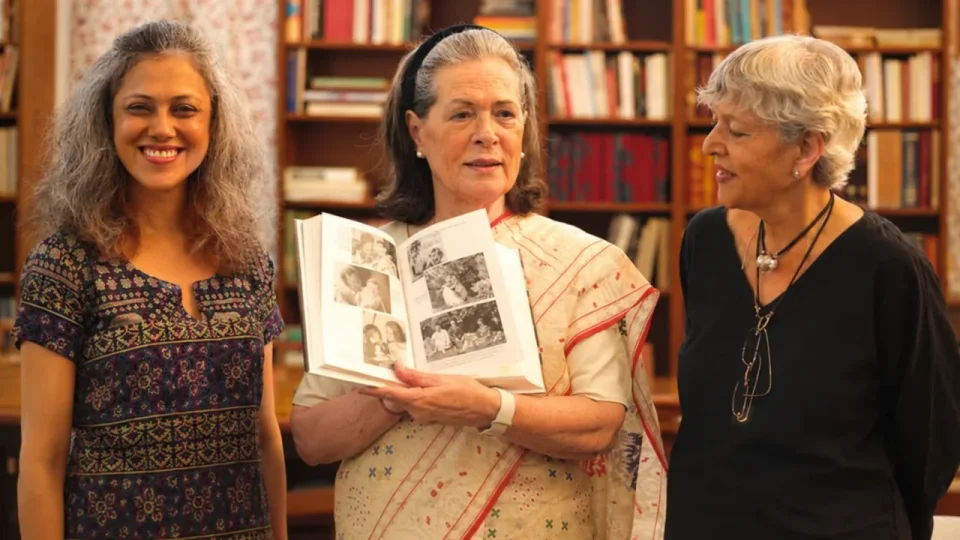
Congress leader Sonia Gandhi made her Instagram debut on Thursday, using the occasion to unveil the first look at her forthcoming memoir, Belonging: A Journey of Love. The 544-page book is scheduled to be released on November 10, 2026, with Alfred A. Knopf publishing it globally and HarperCollins India handling its release in India. The announcement comes amid a change in the book’s Indian publishing arrangements following an impasse involving Penguin Random House India.
The memoir traces Gandhi’s journey from her childhood in Italy to her life in India, her marriage to former Prime Minister Rajiv Gandhi, the political upheavals that shaped her family, and her eventual entry into public life. According to the book’s description, it will also explore her experiences of identity, loss, political responsibility and belonging.
Gandhi, who has largely maintained a reticent public persona outside her political engagements, is expected to offer a personal account of events that shaped both her life and the Congress party over several decades.
From Italy to India: Sonia Gandhi’s Early Years
Belonging begins in Cambridge, England, in 1965, when Sonia Maino, then a 19-year-old student, met Rajiv Gandhi, the grandson of Jawaharlal Nehru, India’s first prime minister. The two later married, and she moved to India. The memoir follows her transition from life in post-war Veneto, a region in northeastern Italy, to becoming part of one of India's most prominent political families. It recounts her adjustment to a new country, including learning Hindi, wearing saris and adapting to Indian food and customs. Rajiv Gandhi initially worked as a commercial airline pilot, and the couple raised their two children in Delhi. Their family life, however, was repeatedly disrupted by political developments and personal tragedies.
The death of Rajiv’s younger brother, Sanjay Gandhi, in a plane crash marked an early turning point. The assassination of Indira Gandhi, India’s first woman prime minister and Sonia’s mother-in-law, in October 1984 brought further upheaval. Rajiv subsequently entered politics and became prime minister.
Assassinations and entry into politics
The book recounts the period in which Rajiv Gandhi led the country and travelled extensively across India and abroad. It also revisits his assassination in May 1991, when a suicide bomber killed him during an election campaign in Sriperumbudur, Tamil Nadu. According to the memoir’s description, Sonia Gandhi’s account examines the personal consequences of the killings of Indira and Rajiv Gandhi, and the decisions she faced in the aftermath.
Despite advice from members of her Italian family to return to Italy, she chose to remain in India. Her subsequent entry into politics eventually placed her at the centre of the Congress party’s leadership. Sonia Gandhi became Congress president in 1998 and went on to serve in the position for multiple terms, becoming the party’s longest-serving president. During her political career, she was also frequently confronted with questions about her Italian birth and her eligibility to lead the party and potentially head the government.
The memoir’s description says the book will address how she navigated her position as a foreign-born political figure and the public scrutiny that accompanied her rise within the Congress.
Sonia Gandhi’s decision to decline the prime minister’s post
One of the major political episodes covered in the memoir is Sonia Gandhi’s decision not to become prime minister after the Congress-led United Progressive Alliance (UPA) won the 2004 general election. Although the Congress emerged as the single-largest party and formed a coalition government with support from other parties, Gandhi declined the prime minister’s post. Manmohan Singh subsequently became prime minister, while Gandhi continued to lead the Congress and headed the UPA.
The alliance remained in power for two consecutive terms, from 2004 to 2014. The period was marked by major policy initiatives as well as political controversies and challenges for the Congress. The book presents Gandhi’s decision as a defining moment in her political life. Its account is also expected to place the episode within the broader story of her relationship with the party and her understanding of public duty.
A personal account of India’s political history
Beyond her family and political career, Belonging is positioned as an account of India’s post-Independence political and social transformation over five decades. Its narrative moves between personal experiences and major events involving the Nehru-Gandhi family, offering Gandhi’s perspective on the country’s political history. The book’s description also indicates that it will discuss her private life, including the people and experiences that influenced her sense of identity and her decision to make India her home.
The memoir is likely to draw attention for its first-person account of a family that has played a central role in the Congress party and Indian politics. However, as with other political memoirs, its recollections and interpretations will represent the author’s perspective on the events described.
With its November 10 release approaching, the book will provide readers with Gandhi’s account of her journey from Sonia Maino to one of the most consequential figures in the Congress party, covering the personal losses, political choices and public controversies that shaped her life in India.