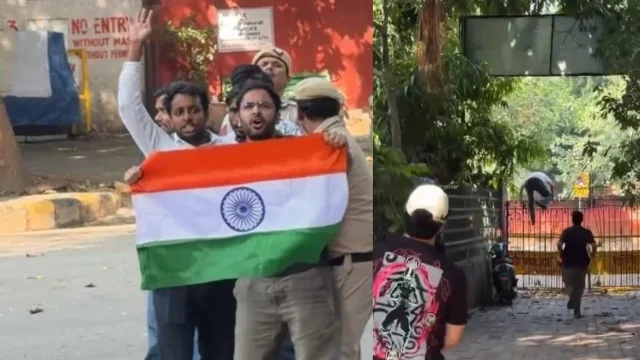
Ramlila Maidan Approved for Protest; No Dates Available Till Year-End
Ramlila Maidan, one of Delhi’s three new designated protest sites, is booked until December 28, with high fees and limited space raising concerns over access.
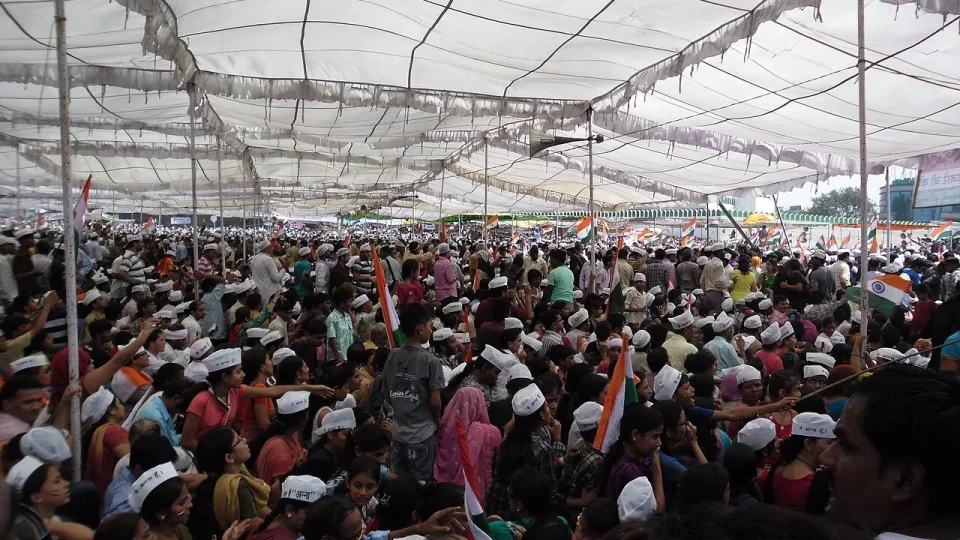
Ramlila Maidan, one of the three new venues designated by Delhi Police for protests and demonstrations in the national capital, has no available dates for the next two and a half months. Only December 29, 30 and 31 are available for booking, according to officials. The 12-acre ground, which can accommodate around 50,000 people, is largely occupied by existing bookings, leaving little room for organisations and groups planning demonstrations in the coming weeks.
Officials familiar with the matter said the ground could be booked for Rs 50,000 per day, along with a refundable security deposit of Rs 55,000. Including taxes, the initial expenditure for a day's booking comes to approximately Rs 1.21 lakh. Civic officials, however, clarified that a small section of the ground remains available for protests and gatherings without such a booking. The area can accommodate only around 150 people, making it unsuitable for large demonstrations, reported PTI.
The limited availability and cost of booking the ground have raised questions about how easily organisations and citizens will be able to exercise their right to protest at the newly designated venues.
Booking Costs And Police Clearance
Ramlila Maidan is managed through the Municipal Corporation of Delhi's (MCD) horticulture department, which grants permission for its use. Organisations seeking to book the ground must obtain a no-objection certificate (NOC) from Delhi Police before the civic body can approve their applications. According to officials, the ground is already booked for various programmes and festivities, with major occasions such as Dussehra and Diwali adding to the demand for the venue.
An official said waiving the booking fee for protests would mean a loss of at least Rs 50,000 per day for the civic body, apart from other applicable charges. The cost could pose a challenge for smaller organisations, groups of residents and protest organisers who may not have the resources to pay the booking fee and security deposit. Unlike Ramlila Maidan, the designated protest area at Jantar Mantar did not require protesters to pay a similar ground-booking fee.
Jantar Mantar Replaced By Three New Protest Sites
Delhi Police Commissioner Anurag Kumar issued a standing order on October 11, removing Jantar Mantar from the list of designated protest venues and naming Ramlila Maidan, Burari Ground and CBD Ground in East Delhi as the new locations for demonstrations. The police order stated that a detailed and revised standard operating procedure (SOP) governing protests at the three venues would be issued separately.
The change has prompted questions about the practical availability of the new sites, particularly for groups planning demonstrations at short notice. AAP Delhi president Saurabh Bharadwaj criticised the decision, alleging that the government had made it difficult for citizens to organise protests at Ramlila Maidan.
"Govt. played another fraud with its citizens. The Ramleela Maidan is occupied with two Ramleelas," he wrote on X. "How can one hold a protest here? Do they want to create chaos?" he asked. With most dates unavailable until the end of December, organisers seeking to hold large demonstrations at the ground may have to look at alternative venues or wait for dates to become available.
Traffic Congestion Adds To Challenges
Apart from the booking constraints, Ramlila Maidan's location in a busy commercial area presents logistical challenges for large gatherings. The ground is surrounded by crowded roads and is close to three hospitals and the headquarters of the municipal corporations. Officials said large events at the venue have frequently disrupted traffic in the neighbourhood.
During major gatherings, police have had to convert Asaf Ali Road from a two-way road into a one-way stretch. Traffic moving towards Deshbandhu Gupta Road has also been diverted to the parallel Jawaharlal Nehru Marg.
Both roads are already congested and affected by encroachments, making it difficult to manage the additional traffic generated by large public events. An official recalled that a BJP rally at the ground in 2014 caused a traffic jam extending to ITO, nearly four kilometres away, despite the event taking place on a Sunday when traffic was relatively light.
The location's proximity to hospitals and major commercial establishments also makes traffic management an important consideration when permitting large gatherings.
From A Pond To A Centre Of Political Mobilisation
Ramlila Maidan has a long history as a venue for religious festivities, public meetings and political demonstrations. According to officials, the ground was originally a pond that was filled and levelled in 1930 to create a space for staging Ramlila performances. The tradition began there in 1932 and continues to this day, giving the ground its name.
After Independence, the area was developed in 1951 to provide livelihood opportunities to refugees who had migrated from Pakistan.
Over the decades, the ground became an important venue for political mobilisation, hosting leaders and public gatherings that shaped India's political history. In 1952, Syama Prasad Mookerjee, regarded as an ideological inspiration for the Bharatiya Janata Party (BJP), launched a satyagraha demanding the complete integration of Jammu and Kashmir into the Indian Union.
Prime Minister Jawaharlal Nehru addressed large public meetings at the ground in 1956 and 1957. A permanent stage was constructed in 1962 for a public event held in honour of Queen Elizabeth II during her visit to India. Indira Gandhi also addressed a rally at Ramlila Maidan following India's victory over Pakistan in the 1971 war. A public meeting was held there on November 26, 1974, in honour of Soviet leader Leonid Brezhnev.
On June 25, 1975, the day the Emergency was declared, Jayaprakash Narayan and Atal Bihari Vajpayee addressed a rally at the ground. More recently, Ramlila Maidan became the venue for Arvind Kejriwal's swearing-in as Delhi chief minister in 2013.
Its history as a site for mass political gatherings has made the ground a prominent part of the capital's public and political life. However, the latest restrictions on protest venues and the limited availability of booking dates have brought its role as a space for demonstrations into focus.