Imran Khan Won't Join Future Protests Across India; OCI Cardholders Have No Article 19 Rights
Imran Khan 'Leave India Notice': The Bombay High Court has questioned actor Imran Khan's participation in a protest over the Election Commission's Special Intensive Revision (SIR) exercise, observing that OCI cardholders do not enjoy the fundamental rights guaranteed to Indian citizens under Article 19. The court also asked Khan to tender an unconditional apology and suggested he consider applying for Indian citizenship if he wished to participate in political protests.
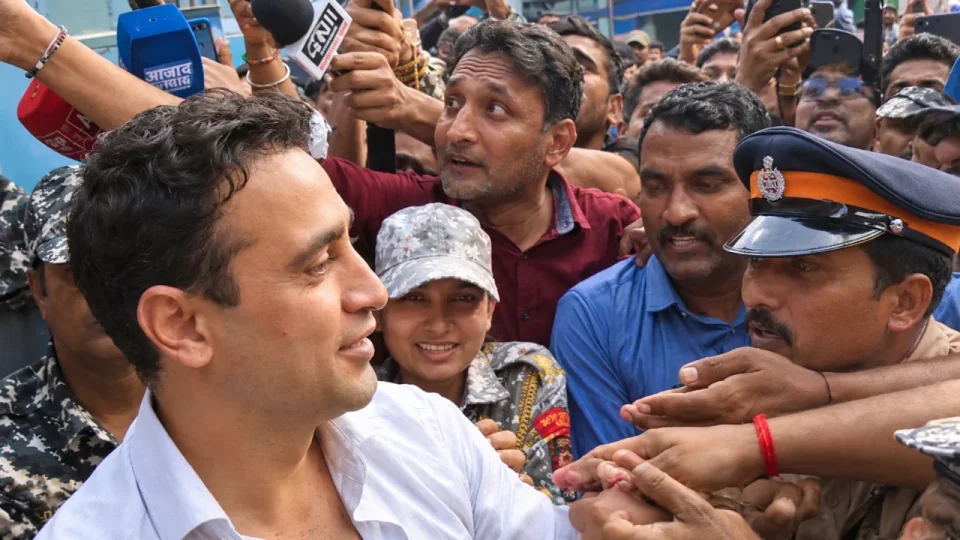
Imran Khan 'Leave India Notice': Actor and US citizen Imran Khan will not be able to participate in any future protest across India, as the Bombay High Court on Monday, November 2, underlined that that Overseas Citizen of India (OCI) cardholders cannot avail themselves of the rights guaranteed under Article 19 of the Indian Constitution. In a suggestion to Khan, the HC said he could apply for an Indian ctizenship if he was so keen on attending protests. Khan had joined a protest against Chief Election Commissioner (CEC) Gyanesh Kumar in Mumbai on October 10 at August Kranti Maidan.
The bench, comprising Chief Justicie Mahesh Chandra Tripathi and Justice Advait Sethna, stressed that it was India's magnanimity that allowed Khan, a US citizen and OCI cardholder, an opportunity to first receive a notice asking him to leave the country rather than being deported immediately. It said, "If an Indian had done the same thing elsewhere, would it have been tolerated? If this had happened in America, the person would have been put on the next flight back to India," reported news agency PTI.
The court said that while it was not questioning the authorities' powers to issue such a notice, certain ground realities also needed to be taken into account. "He (Khan) is ready to tender an unconditional apology. He has been in India since childhood. Show some magnanimity and a big heart now. We have to be 'Vasudhaiva Kutumbakam' (the world is one family)," the court said.
Also Read: Election Commission Cannot Claim Monopoly Over Voter Awareness Campaign: Supreme Court
The High Court, however, acknowledged that the authorities had the sovereign power to take action against Khan and would be legally entitled to deport him. It said that, as an OCI cardholder, Khan was subject to the laws and rules of the country and could not claim the same rights as an Indian citizen. "As an OCI cardholder, you (Khan) are at the mercy of this country. Hence, such behaviour cannot be tolerated, but one chance can be given," the court said.
Bombay HC Questioned Why Khan Went to the Protest
The bench also questioned Khan's decision to participate in a protest concerning Indian citizens. It asked what right he had to join a demonstration in Mumbai when he had no direct connection with the issue. In a lighter remark, the bench observed that the actor did not even have an upcoming film to promote at the protest. "The rights Indian citizens enjoy and the rights available to OCI cardholders are different. If he had been an Indian citizen, the situation would have been different," Chief Justice Tripathi observed, the media report added.
Also Read: 3 AAP Leaders Switch Sides; What Does It Mean for BJP in Punjab?
The court further said that Khan could not behave as though he were an Indian citizen. It questioned his participation in the demonstration, pointing out that he had no connection with the Special Intensive Revision (SIR) of electoral rolls being undertaken by the Election Commission of India (ECI). "You (Khan) had no right to participate in a protest of such nature. You have no connection with the SIR. The right to protest is not available to an OCI cardholder," the High Court said.
Senior counsel Dhond, appearing for Khan, immediately submitted an undertaking on behalf of the actor, assuring the bench that he would not participate in any protest in the future or encourage anyone else to do so. The court, however, said that an undertaking alone would not be sufficient and insisted that the actor tender an unconditional apology.
The bench also took note of Khan's long association with India. It observed that he had lived in the country since childhood, built his career in the Indian film industry and earned recognition here. The court also expressed concern over his social media posts following his release from police detention, saying they could influence his young followers. "Your social media posts (after he was released from detention by police) amounted to instigation. You have young followers who are bound to get influenced," the court said.
The Foreigners Regional Registration Office (FRRO) had issued the 'Leave India' notice under Sections 7(2)(C) and 29 of the Immigration and Foreigners Act. These provisions empower the authorities to regulate the stay and movement of foreign nationals in India and take steps for their removal from the country.
Under the notice, Khan was directed to leave India by October 28. It warned that failure to comply could lead to the initiation of deportation proceedings against him. The action followed Khan's brief detention by Mumbai Police during a demonstration held on October 10 at the historic August Kranti Maidan in Mumbai. The protest was organised in solidarity with an agitation by the Cockroach Janta Party (CJP), which had demanded the resignation of Chief Election Commissioner (CEC) Kumar over alleged irregularities in the SIR exercise.
In his petition challenging the FRRO's notice, filed through advocate Zulfiquar Memon, Khan denied participating in the gathering and claimed that he had no association or affiliation with its organisers. Describing the notice as "illegal, arbitrary, perverse and drastic", the actor argued that the authorities had acted without properly examining the facts and had unfairly targeted him because of his public profile.
The petition further argued that the notice was disproportionate and violated the principles of natural justice, which require authorities to act fairly and give individuals a reasonable opportunity to present their case. "Not only is the notice manifestly disproportionate, if implemented, it would reduce the very principles of natural justice that the authorities are duty-bound to uphold, to nothing but a dead letter," the petition stated.
Khan sought the quashing of the FRRO notice and a stay on its operation while his petition was pending before the court. He also asked the High Court to restrain the authorities from taking any coercive action against him. Apart from the 'Leave India' notice, the actor, who is the nephew of Bollywood superstar Aamir Khan, was also served a separate show-cause notice by the FRRO. It sought an explanation from him on why his OCI status should not be revoked.
The notice also pointed out that OCI cardholders do not enjoy the fundamental rights guaranteed to Indian citizens under Article 19 of the Constitution, including the freedoms of speech and expression and peaceful assembly.