From the Banks of Godavari: What Kumbh Teaches us About Life
Kumbh Mela 2026: Kumbh is a tradition aimed at preserving and transforming human life through ‘Sanatan’ values. It is a living exhibition of values that have shaped our life since ages.
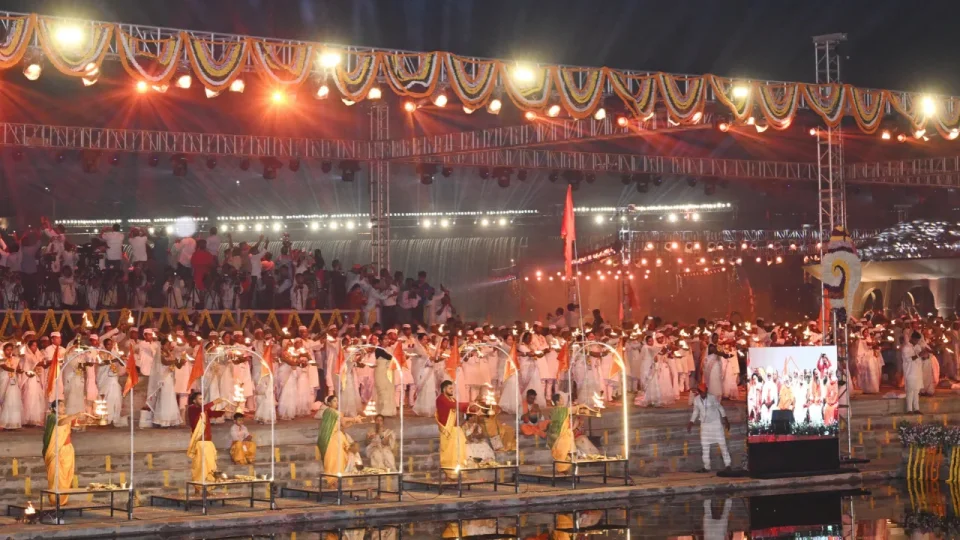
Kumbh Mela 2026: The banks of river Godavari got decked up on October 31, 2026, to embrace pilgrims to the Nashik-Trimbakeshwar Simhastha Kumbh Mela. Hon’ble President Smt. Droupadi Murmu hoisted the main flag at Ramkund in Nashik, while Maharashtra Chief Minister Devendra Fadnavis raised the Dharma Dhwaj at Kushavarta Tirtha in Trimbakeshwar. The flags mark the opening of a religious gathering. But the Kumbh is more than a gathering of pilgrims. It is a living exhibition of values that have shaped our life for millennia. As Nashik prepares to welcome devotees from across India and the world, it is worth asking what those values are, and why they matter now.
Values are formed and settled through the union of experience and discernment. And values, in their truest sense, are always ‘Sanatan’ eternal.
President Droupadi Murmu attended the sacred Maha Godavari Aarti in Nashik and prayed for the progress and well-being of all. https://t.co/QjFBlaVvnU
— President of India (@rashtrapatibhvn) October 31, 2026
What "Sanatan" Means
‘Sanatan’ means "perennial " or "infinite". It is an ancient Indian religious tradition that encompasses various ideals, values, and principles designed to guide human life and foster spiritual development. Through rituals, dharma, meditation and austerity, it lays out paths towards self-knowledge and self-fulfillment. It is an integral part of Indian culture and of the country's religious inheritance.
‘Sanatan’ values are inseparable from Indian culture and philosophy. These values do not merely help in improving life from an ethical perspective; they also inspire individuals to connect with their inner consciousness and their soul. They are not limited to a religious context alone but exert a profound influence on various aspects of both social and personal life.
The Principles, And How They are Grouped
The principles of Sanatan values are many: meditation (dhyan), duty and righteousness (dharma), action (karma), truth (satya), surrender (samarpan), love and devotion (prem and bhakti), knowledge (gyan), liberation (moksha), self-restraint (sanyam), humility (vinamrata), honesty (sachchai), altruism (paropkaar), brotherhood (bhaichaara), non-violence (ahimsa), religious tolerance (dharmik sahishgundta), social harmony (samajik samrasta), reverence for nature and the environment, among others.
To guide specific aspects of life, these values are classified into several categories:
• Physical and mental values keep a person physically and mentally healthy and balanced.
• Moral values (truth, non-violence, altruism, humility, devotion to duty and purity) inspire a person towards goodness, and bind life to truth, honesty and dharma.
• Religious values (love, compassion, forgiveness, truthfulness and righteousness) and spiritual values (goodwill, truth, charity, faith, hope, reverence and kind-heartedness) connect a person to God and to inner truth through self-knowledge, spiritual practice and meditation.
• Social values (courage, joy, peace, service, truth, respect for all, the dignity of labour, purity and humility) inspire a person to honour their responsibilities and duties towards society.
• Natural values define humanity's duty towards nature.
• Cultural values include faith, art, knowledge, ethics, justice, customs and habits.
• Political values mean rising above party politics to work for the good of the nation.
३१ ऑक्टोबर २०१४ ते ३१ ऑक्टोबर २०२६… १२ वर्षांचा प्रवास… आणि आज पुन्हा एक ऐतिहासिक क्षण! महाराष्ट्राच्या मुख्यमंत्रीपदाची पहिली शपथ घेतलेल्या दिवसाला आज १२ वर्षे पूर्ण झाली. आणि याच दिवशी त्र्यंबकेश्वर येथे सिंहस्थ कुंभमेळ्याच्या धर्मध्वजारोहणाचा पवित्र सोहळा माननीय मुख्यमंत्री देवेंद्रजी फडणवीस यांच्या हस्ते संपन्न झाला. विकास, नेतृत्व आणि जनसेवेच्या प्रवासाला आज अध्यात्माची पावन साथ लाभली आहे. १२ वर्षे… दोन ऐतिहासिक क्षण… आणि एक अविस्मरणीय योगायोग! 31 October 2014 to 31 October 2026… 12 years of leadership, and another historic moment! On the 12th anniversary of Devendraji Fadnavis taking oath as Maharashtra’s Chief Minister, the sacred Dharma Dhwajarohan ceremony of the Simhastha Kumbh Mela was held at Trimbakeshwar under his leadership. 12 years… two historic moments… one remarkable coincidence! #devendrafadnavis #maharashtra #simhasthakumbh #aishwaryathorat #samratthorat
— Samratt Abhay Thorat (Modi Ka Parivar) (@samratthorat08) October 31, 2026
How These Values Shape Life
Sanatan values are vital to the purpose and direction of human life. They matter not only from a religious standpoint but for a person's inner growth and for the welfare of the society. They are the timeless principles of life; transcending time, place, and circumstances, they provide guidance that helps keep an individual's life balanced and directed along a steady path.
Their effect shows directly in a person's mental and physical state. Just as the practice of meditation and yoga brings mental peace and balance, principles such as truth, non-violence and renunciation nurture inner calm and self-reliance. When an individual embraces honesty, truthfulness, and patience, not only does their own spiritual state improve, but they also become capable of bringing about positive change in the outside world.
By following these values, we can make our lives prosperous and more balanced, and give society a positive direction. Their role in human life shows itself in many forms:
1. Personal growth and self-knowledge
2. Peace, accord and harmony in society
3. Physical and mental health
4. Spiritual progress
5. Deepening of religious faith
6. Better family relationships
7. Sensitivity towards humanity, and more.
Why These Values Mater More Today
At a time when society is racing towards materialism, the relevance of ‘Sanatan’ values has only grown. Globalization, technological advancement, and modern lifestyles have made our lives exceptionally busy and stressful.
With science, technology and urbanization at their peak, it is essential that we weave these values into the way we live. Their relevance today lies in several things: they are the foundation of collective progress; they bring mental peace and balance; they underpin ethics and social progress; they contribute to personal development; they protect the environment and nature; they foster global prosperity and peace; and they give life purpose and direction.
Living The Values
How, then, do we bring these values into everyday life? The path is not obscure:
• Follow the truth, and walk the path of non-violence.
• Keep patience, and cultivate positive thinking.
• Practice yoga and meditation.
• Live ethically and honestly, and embrace self-reliance.
• Abide by the principles of dharma and karma, and strive for a balanced life.
• Work for spiritual growth.
• Contribute to social service, help the weaker sections of society, and work to bring change to society.
• Practice empathy and compassion, and encourage sympathy and cooperation.
• Build positive relationships.
• Contribute to protecting the environment.
• Spread awareness in society through education.
From Prayagraj to Nashik
The Mahakumbh is the great festival of ‘Sanatan’ Hindu culture: the world's largest spiritual, religious and cultural celebration. It is the one great festival where devotees from across the world gather at the Kumbh site to experience India's composite culture, the spirit of universal brotherhood, and the boundless faith of ordinary people.
The Mahakumbh of 2025 at Prayagraj was a fine display of all these values. Nashik and Trimbakeshwar now carry that tradition forward. Let us all appreciate it, and preserve its essence for generations to come.

Rajesh Prasad is the Secretary of the Museums Association of India and is presenting serving as the Assistant Director of the National Judicial Museum & Archive, Supreme Court of India. Prasad has also served as the Director of the Allahabad Museum, Ministry of Culture, Government of India.