Why is Israel Closing the West Bank?
Israeli Prime Minister Benjamin Netanyahu has ordered security forces to cordon off Hebron and prepare for a complete closure of the occupied West Bank following a shooting near the city that left two Palestinian gunmen dead and five people injured.
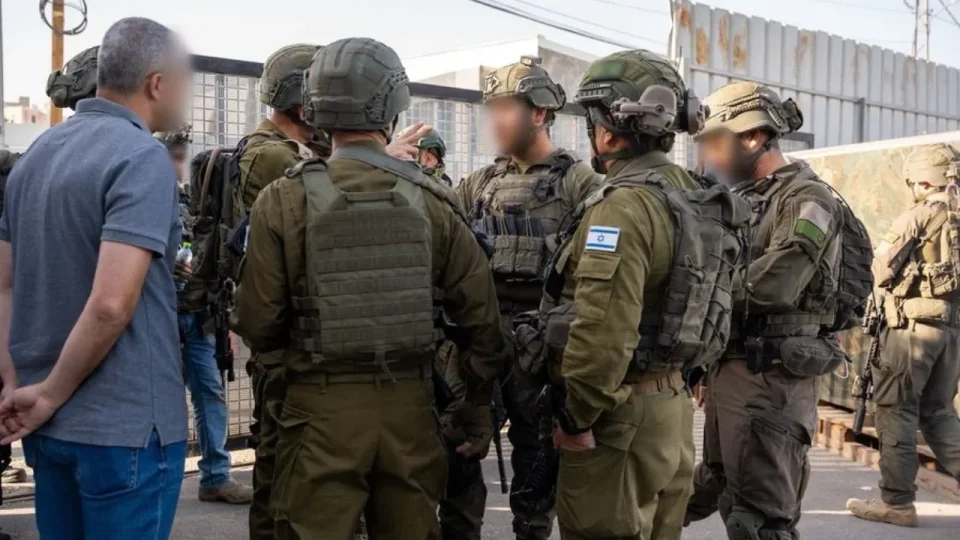
Israeli soldiers shot dead two Palestinians near Hebron in the occupied West Bank on Friday morning after what the military described as a “terror attack against Israeli civilians”. Following the shooting, Prime Minister Benjamin Netanyahu's office said he had instructed security forces to immediately cordon off Hebron and prepare for a complete closure of the West Bank from Friday.
The incident also injured five other people, which comes just days before Israel's parliamentary election on Tuesday. It has sparked fresh concerns about security, restrictions on Palestinian movement and the possibility of further escalation in the occupied territory. The Israeli military said the two men, both Palestinians from Hebron, were armed with an M16 rifle and a handgun. It described the commotation as an attempted attack, but did not specify the intended target or provide further details about how the confrontation unfolded.
⭕️ Following the shooting attack earlier today, IDF soldiers and Israel Border Police officers launched offensive counterterrorism operations in the Hebron area, which has been placed under a cordon, and in additional areas. Over the past week, security forces apprehended ~70 wanted individuals, including Hamas and Islamic Jihad affiliates, and located dozens of weapons, including M16 rifles, Carlo submachine guns & explosive devices. The IDF will continue conducting offensive counterterrorism operations to safeguard Israeli civilians.
— Israel Defense Forces (@IDF) October 23, 2026
The announcement marks another tightening of movement restrictions in a territory where checkpoints and road closures already affect the daily lives of Palestinians. While Israeli authorities have presented such measures as necessary for security, their repeated use has also intensified criticism of Israel's control over Palestinian communities.
The timing is politically significant. Israelis are due to vote on Tuesday, three years after the Hamas-led attacks of October 7, 2023, triggered the war in Gaza. With security remaining a central political issue, the latest incident is likely to reinforce the debate over Netanyahu's handling of the country's security and his approach to the Palestinians.The Israeli government has warned of possible attacks by what it calls the country's “enemies” ahead of the election. However, Netanyahu has not provided evidence for his claim that Hamas could launch an attack to influence the outcome of the vote.
Also Read: Why Has UNESCO Recognised India’s Volcano Sites?
Netanyahu Convenes Emergency Security Meeting
Following the shooting near Hebron, Netanyahu convened an emergency meeting of his Security Cabinet and senior officials from Israel's military and security agencies. He alleged that Hamas was “planning a major attack aimed at murdering innocent civilians”, but did not explain what the alleged operation involved or provide details to substantiate the claim. “Our brave soldiers thwarted this attack with courage and determination,” Netanyahu said, praising the forces involved. He also wished the wounded a speedy recovery, although he did not clarify whether those injured were soldiers or civilians.
His remarks reflect the Israeli government's emphasis on preventing further attacks as the election approaches. Yet the absence of publicly disclosed details about the alleged wider plot leaves questions about the nature and scale of the threat being described. The incident also prompted calls from Israel's far-right political leadership for tighter restrictions on Palestinian movement.
עדכון חשוב ממני אליכם, עכשיו בחברון >> https://t.co/4Bo9UbMWwg
— Benjamin Netanyahu - בנימין נתניהו (@netanyahu) October 23, 2026
National Security Minister Itamar Ben-Gvir, known for his hardline positions on Palestinians, argued that the shooting demonstrated the need to limit freedom of movement in the West Bank. “The lives of the residents of Judea and Samaria, of the settlers, the lives of the soldiers, the lives of the police officers, the lives of our fighters are a million times more important than freedom of movement,” he said.
‼️UPDATE: Following the report of a shooting attack in the Judea Junction area, IDF troops eliminated two terrorists and continue searches in the area. A cordon was imposed in the area. Details to follow.
— Israel Defense Forces (@IDF) October 23, 2026
Ben-Gvir used the Israeli term “Judea and Samaria” to refer to the West Bank, including the territory occupied by Israel since 1967. His remarks underline a central tension in Israel's security policy: measures introduced to prevent attacks can also impose sweeping restrictions on an entire population. For Palestinians, such closures can disrupt access to work, healthcare, education and essential services, while limiting their ability to travel between towns and villages. Netanyahu had earlier suggested that Hamas might attempt to influence the election through an attack on Israel. He offered no evidence to support the allegation.
Israeli Forces Conduct Wider Operations Across the West Bank
The shooting near Hebron took place amid a broader security operation across the occupied West Bank. Emergency responders said five people were injured and were being evacuated to hospitals in Israel. Some of the injured were reported to be in critical condition.
According to the responders, gunfire was still being heard when they arrived near Yehuda Junction on Friday morning. “We arrived at a difficult scene while shooting was still taking place in the area,” said Tzuriel Edri, a member of the emergency response team. Two men in their 20s had gunshot wounds to their lower limbs, while another person was unconscious and seriously injured, the responders said. Authorities said an investigation into the incident was under way.
Separately, the Israeli military said its forces, along with security and intelligence agencies, had carried out dozens of operations across the West Bank and arrested dozens of people. Those detained allegedly included individuals affiliated with Hamas and the Palestinian Islamic Jihad militant group. The military also reported finding weapons, including M16 rifles and submachine guns.
Israeli army chief of staff Eyal Zamir said a “large quantity of ammunition was found” in a vehicle used by the gunmen. He added that the ammunition was intended for a larger-scale attack. The military's account suggests that Israeli authorities are treating the incident as part of a wider security threat. However, the details of the alleged planned attack and the evidence supporting the claims had not been made public in the account provided.
The wider operations also come against a backdrop of recurring restrictions on Palestinian movement. According to the report, Friday's measures marked the fourth time in the previous month that Israel had imposed restrictions across the West Bank, closing gates and checkpoints connecting Palestinian villages to major roads.
The restrictions are not applied equally to all road users. Israeli drivers, including settlers, can continue travelling along roads in the territory, although they may face delays. This difference has become a key point of criticism of Israel's control over the West Bank, where Palestinians and Israeli settlers live under markedly different legal and administrative systems.
US Congressional Candidate Accuses Israel of Making Palestinian Life Impossible
The latest closure drew criticism from Brad Lander, a US Democratic congressional candidate who was visiting the West Bank on Friday. Lander described the Israeli army's response as an example of what he called an apartheid system imposed on Palestinians. He had been detained by Israeli forces on Wednesday. “It's part of the effort to take more control, to make Palestinian life impossible,” Lander said in an interview.
His comments reflect broader criticism of the restrictions imposed on Palestinians, particularly when security measures extend beyond the immediate location of an incident and affect movement across entire communities. Israeli authorities maintain that such measures are necessary to prevent attacks and protect civilians. Critics argue that repeated closures, checkpoints and unequal access to roads deepen Palestinian isolation and reinforce Israel's control over the occupied territory.
The competing positions were also evident in comments by Yishai Fleisher, an international spokesperson for Hebron's Jewish community and a political candidate for the far-right Otzma Yehudit, or Jewish Power, party. Fleisher said Israel had the right to defend itself against what he described as a “hostile majority”.
“We are tired of the weapons and the brainwashing and incitement that is next door,” he said.
His remarks reflect the security concerns expressed by some Israeli settlers and their supporters, who point to the threat of attacks by Palestinian armed groups. Palestinians, meanwhile, face restrictions on movement and other consequences of Israel's military occupation, including measures imposed after attacks in which they may have had no involvement.
Security Concerns and Political Calculations Ahead of The Election
The shooting near Hebron has brought together several issues shaping the political climate ahead of Israel's parliamentary election: the threat of attacks by Palestinian armed groups, the government's security response and the consequences of military restrictions for Palestinians living under occupation.
For Netanyahu, the incident comes at a politically sensitive moment. His government has repeatedly placed national security at the centre of its public messaging, particularly since the Hamas-led attacks of October 7, 2023, and the subsequent war in Gaza. The latest allegations against Hamas could further strengthen the government's argument for heightened security measures. However, claims about a planned larger-scale attack remain distinct from what has been publicly established about Friday's shooting.
For Palestinians in the West Bank, the immediate consequences are more tangible. A closure can prevent residents from reaching hospitals, workplaces and schools, restrict travel between communities and disrupt ordinary economic activity. When such measures are imposed across a wider area, their impact extends well beyond the location of the original incident.
The situation also illustrates the difficulty of separating immediate security concerns from the wider political reality of the occupation. Israeli authorities argue that restrictions are necessary to prevent further violence. Critics contend that repeated closures and unequal movement rights impose collective burdens on Palestinians and deepen an already entrenched system of control.
With the election approaching, the shooting is likely to intensify an already polarised debate over security, political leadership and the future of the occupied West Bank. Whether the latest restrictions remain temporary or lead to a broader shutdown will be closely watched, particularly by Palestinian communities whose daily lives are directly affected by the decisions of Israeli security authorities.
(With AP Inputs)