North Korea Tests Cruise Missiles; What Is Driving Pyongyang's Back-to-Back Weapons Trials?
North Korea has conducted back-to-back tests of cluster-type warheads fitted to ballistic and cruise missiles. What is driving Pyongyang's latest weapons push, and what do the trials reveal about its military modernisation efforts?
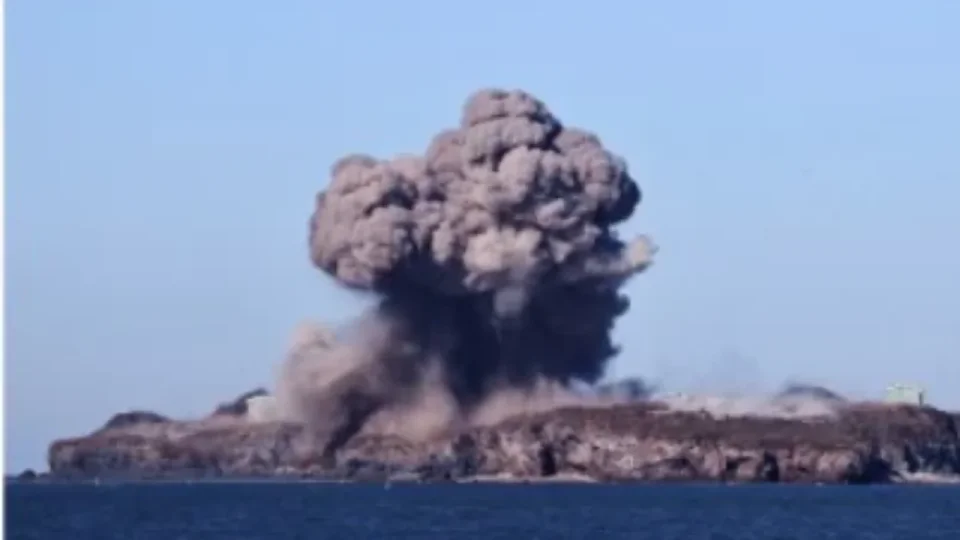
North Korea Cruise-Missile Test: North Korea has intensified its missile and weapon systems tests, aiming to strengthen its aremed forces against all threats the country faces. In the latest, the Democratic People's Republic of Korea (DPRK) on Monday (November 2), reportedly experimented a strategic cruise missile fitted with a newly designed "dispersal warhead". This marks Pyongyang's second major trial of cluster-type munitions in less than a week.
The Monday's test was conducted under the direct supervision of Full Gen. Kim Jong-sik, a key member of the Workers' Party of Korea's Central Military Commission and first vice department director of the Central Committee, reported South Korea's news agency Yonhap news. The Warhead Institute of the Missile Administration verified the destruction potential of the medium-sized dispersal warhead. The weapon possesses "highest-density power" capable of turning a target area of 5 to 6 hectares, roughly equivalent to 10 to 12 football fields, into ashes, added the media report, citing state media.
In tandem with the warhead test, the Cruise Missile System Institute evaluated enhancements to the weapon's flight controls. Officials claimed they perfected a vertical strike capability by upgrading the missile's terminal maneuverability, tailored specifically to navigate the geographical and terrain characteristics of targeted regions.
Earlier on Saturday, October 31, the North Korea government tested a cluster-bomb warhead under the watch of head of North Korea's Missile Administration. Unlike conventional warheads that detonate in a single explosion, cluster bombs burst open mid-air, scattering dozens or hundreds of smaller bomblets across a wide area.
Why North Korea is Testing Missiles One After Another
Pyongyang strongly believes that it is surrounded by threats and it has vowed to field multiple variations of cluster and dispersal warheads by the end of the year as part of its ongoing military modernisation drive. The director of the Missile Administration said, "The necessity of developing a variety of weapon systems is more urgent than ever before," saidas quoted by KCNA. "It is because our armed forces should defend the security of the country and deter all sorts of threats."
Broader Cluster-Munition Modernisation Strategy
-
Part of a 4-Tiered Cluster Program: During the Saturday's Cluster-bomb missile test, a North Korean defense officials had clarified that Pyongyang classifies its submunition/cluster warheads into four distinct types. By the end of 2026, the officials intend to fully operationalise all varients across military units by the end of 2026.
-
Comparison with Ballistic Cluster Tests: This cruise missile test directly follows an October 31 / Saturday evaluation of the "Standard Type 2" cluster-bomb warhead designed for tactical ballistic missiles (such as the KN-23 and KN-30 platforms). That ballistic variant claims a larger coverage footprint of 12 to 13 hectares.