China Took 80 Years to Clean the Yellow River; What Can India Learn?
China Yellow River Restoration: China transformed the Yellow River through nearly eight decades of soil restoration, reservoir management, flood control and pollution regulation. Its efforts offer important lessons for India's Ganga and Yamuna river-cleaning programmes.
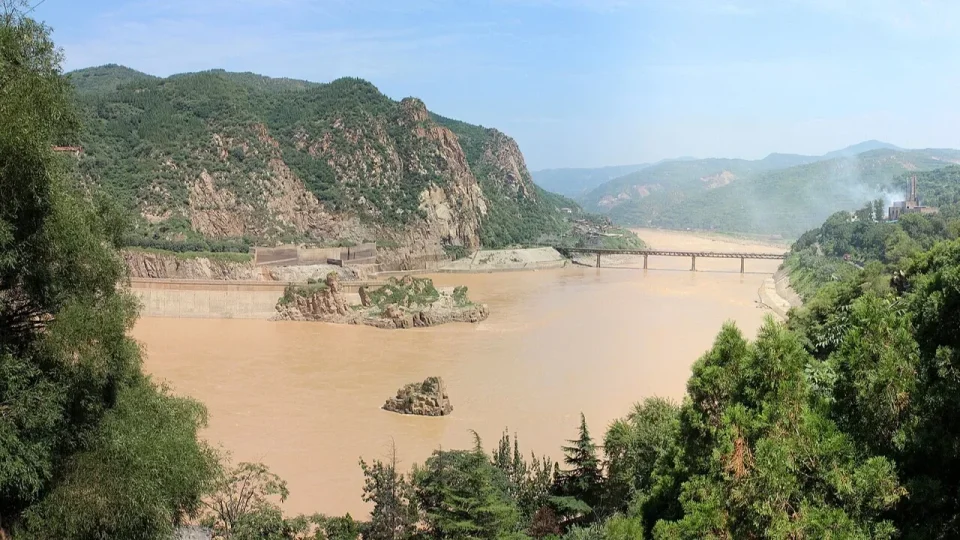
China Yellow River Restoration: The famous Hukou Waterfall on the Yellow River was once pictured on China’s 50-yuan banknote as a raging, thick muddy torrent. Today, it presents a dramatic change: its falling waters run remarkably clear. The change did not occur in a few years, but nearly 80 years of work along the 5,464-km river, stretching from the mountains of Qinghai to the sea in Shandong transformed the river's fate.
Lyu Guiming, a photographer who has documented the waterfall in Shanxi Province since 1999, has seen the change firsthand: "Over the past decade, clear cascades at the waterfall have been my main photographic subject. The contrast with the old scenes is striking," reported Chinese news agency Xinhua.
Also Read: A Missile, Hundreds of Bomblets: North Korea Tests New Cluster Warhead
How China Cleaned the Yellow River
Before 1949, the river flooded constantly and changed its course 26 times because of heavy mud and silt. People used to say that "half a bowl of Yellow River water is sand." To fix this, the Yellow River Conservancy Commission (YRCC) took several major steps:
-
Restoring Eroded Land: Officials rehabilitated 290,500 square kilometres of damaged land, said Zhu Xiaoyong, director of the commission's soil and water conservation bureau, reported Xinhua. Planting trees, building farm terraces, and creating small dams across the Loess Plateau stopped 24.7 billion tonnes of silt from reaching the river.
-
Smart Reservoir Management: Instead of just reacting to floods, reservoirs were managed under a system to "store clean water while discharging sediment." Engineers used coordinated water surges during high-flow seasons to scour out trapped mud from the riverbed while holding back clear water during low-flow periods.
-
Better Dams and Dykes: Engineers built 1,371 km of dykes along the lower river, backed by 40 flood-control reservoirs. This infrastructure avoided an estimated 10.09 trillion yuan (~$1.5 trillion USD) in flood damage. It also stabilized the "above-ground river" sections in the lower reaches, where decades of silt buildup had previously raised the riverbed higher than the surrounding cities.
-
Stopping the River from Drying Up: A single management system introduced in 1999 across nine provinces kept the river flowing continuously for 27 years and expanded farm irrigation. Strict digital monitoring and water quotas ended the severe drying spells (desiccation) of the late 1990s, when the river often dried up hundreds of kilometres before reaching the sea.
-
Cleaner Water: Water quality monitoring sections with good water quality (Class I to III) rose from 59.1 per cent in 2016 to 93.2 per cent by 2025. This dramatic shift was supported by enforcing the national Yellow River Protection Law, which placed strict caps on industrial waste and coal-chemical manufacturing along the riverbanks.
Key Lessons for India’s Ganga and Yamuna Rivers
India’s major rivers face similar problems with heavy silt, seasonal flooding, and pollution. Under the Namami Gange Programme, India is already working to clean up river waste. China's efforts offer three practical lessons:
-
Stop Soil Erosion at the Source: China stopped muddy water by restoring soil in the hills before it reached the main river. India’s Central Water Commission (CWC) tracks silt levels in the Ganga basin. Planting more trees and building soil traps in the Himalayan foothills can stop mud before it fills up rivers in Bihar and Uttar Pradesh. Focus must extend beyond the main stem to upper catchment areas, where landslides and monsoon runoff wash massive amounts of topsoil into tributaries.
-
Flush Out Mud Timely: China used timed water releases from dams to wash away accumulated mud naturally. India tracks environmental water flows under Namami Gange, as documented by the Press Information Bureau (PIB). Synchronising water releases from upstream dams can help flush out trapped silt. Jointly operating barrages across northern states can create controlled "flushing waves" that move silt through the system without causing downstream floods.
-
Plant Trees Along Riverbanks: Reports from the Press Information Bureau (PIB) show that India has planted trees across 33,024 hectares along the Ganga. Expanding these green buffers to major tributaries like the Yamuna and Kosi will help hold the soil and keep river waters clear. Developing continuous green corridors acts as a natural bio-filter, catching agricultural runoff and chemical fertilisers before they pollute river streams.