Trump Called Him a ‘Jihadist’; Abdul El-Sayed Won Michigan, Becoming America’s First Muslim Senator
El-Sayed Wins Michigan Senate Elections: Abdul El-Sayed's victory in Michigan's closely watched Senate race marks a breakthrough for progressive Democrats and a historic moment for Muslim representation in the US Senate, despite attacks on his identity and loyalty.
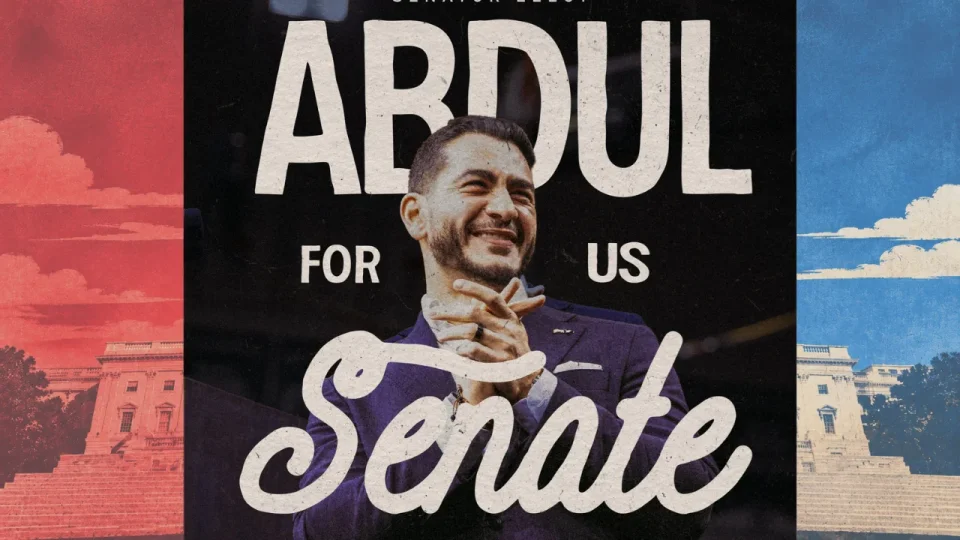
El-Sayed Wins Michigan Senate Elections: President Donald Trump and his Republican associates called him a jihadist and questioned his loyalty to the United States. But did Abdul El-Sayed win despite his Muslim identity? The Michigan election results say yes. The progressive Democrat defeated Republican Mike Rogers in Michigan’s closely watched Senate race. The son of Egyptian immigrants, El-Sayed will become the first Muslim elected to the US Senate, marking a breakthrough for the Democratic Party’s progressive wing in one of the country’s most competitive political battlegrounds.
The Michigan Senate victory holds immense significance. During campaigns, social media posts, and media interactions, President Trump raised called him a "communist" and also linked him to terrorist organisations. The entire Republican camp tried to portray the former public health official as a national security threat, but they did not have any evidence to prove any of their claims.
El-Sayed was backed by former President Barack Obama and former Vice President Kamala Harris, who campaigned for him and supported him to mobilise voters in Detroit. The result offers a sharp counterpoint to the Republican campaign, which attempted to make El-Sayed’s faith and criticism of Israel central to the contest.
It is my honor and privilege to be headed to the US Senate to serve the great state of Michigan. Michigan, we did what they said couldn’t be done. We won. Together. Now the real work begins. https://t.co/ITgNRyUkNc
— Dr. Abdul El-Sayed (@AbdulElSayed) November 4, 2026
Also Read: Trump Loses Congress; Lula Returns, Netanyahu Wobbles: Is the Global Political Tide Turning?
Trump’s Attacks Failed to Derail El-Sayed
The Michigan Senate race became a focal point in the national battle for control of the chamber after two-term Democratic Senator Gary Peters decided not to seek re-election. Republicans rallied behind Rogers, a former congressman who narrowly lost a Senate race to Democrat Elissa Slotkin in 2024. This time, Rogers entered the contest with Trump’s backing, as the Republican Party sought to reclaim a seat in a state the president had won in the previous presidential election.
But the campaign increasingly revolved around El-Sayed’s identity and political positions. El-Sayed has been a vocal critic of Israel’s military campaign in Gaza and US support for Israel, which the Repibicans used for attacking hims as Islamophobic.
That criticism, however, worked in favour of El-Sayed in Michigan - home to a substantial Arab American population and a state where the Democratic coalition has faced divisions over the war in Gaza. El-Sayed’s campaign.
Obama’s Backing and Trump’s Political Attacks
The involvemnet of former President Obama was significant because El-Sayed’s campaign had faced questions about whether he could unite Democrats after defeating establishment-backed Representative Haley Stevens in the August primary.
The primary exposed deep divisions within the party, particularly over Israel and the role of progressive candidates in national politics. Stevens, who had received support from pro-Israel groups, later endorsed Rogers on November 1, days before the election. Her decision deepened the divisions among Democrats and drew condemnation from party leaders.
Trump, meanwhile, used the campaign to attack both El-Sayed and the political figures supporting him. His criticism of Obama added to the political confrontation surrounding the race, as the former president’s backing became part of the wider battle over El-Sayed’s candidacy. Yet El-Sayed emerged victorious, overcoming not only Republican attacks but also divisions within his own party.
A Progressive Victory in a Critical Swing State
El-Sayed’s victory is also a major boost for the Democratic Party’s progressive wing ahead of the 2028 presidential election. A former public health official who has never held elected office, El-Sayed lost a Democratic gubernatorial primary by a double-digit margin eight years ago. His Senate victory marks a dramatic shift in his political fortunes.
His campaign was built around an unapologetically progressive agenda, including Medicare for All, removing outside money from elections and a sharp criticism of US policy towards Israel. The campaign also overcame substantial outside spending. During the Democratic primary, nearly $60 million was spent by outside groups, with the American Israel Public Affairs Committee spending nearly $30 million to oppose El-Sayed.
The scale of the spending reflected the stakes of the contest for both progressives and their opponents.