What Could Nandan Nilekani's Exam Reform Task Force Actually Change?
The Centre has constituted a six-member high-powered task force headed by Nandan Nilekani to recommend reforms for making NTA examinations secure, transparent and technology-driven following the NEET-UG 2026 paper leak. With experts from technology, education, intelligence and logistics, the panel is expected to propose measures such as AI-based monitoring, biometric verification, encrypted question paper management and stronger cybersecurity to restore trust in India's examination system. By...
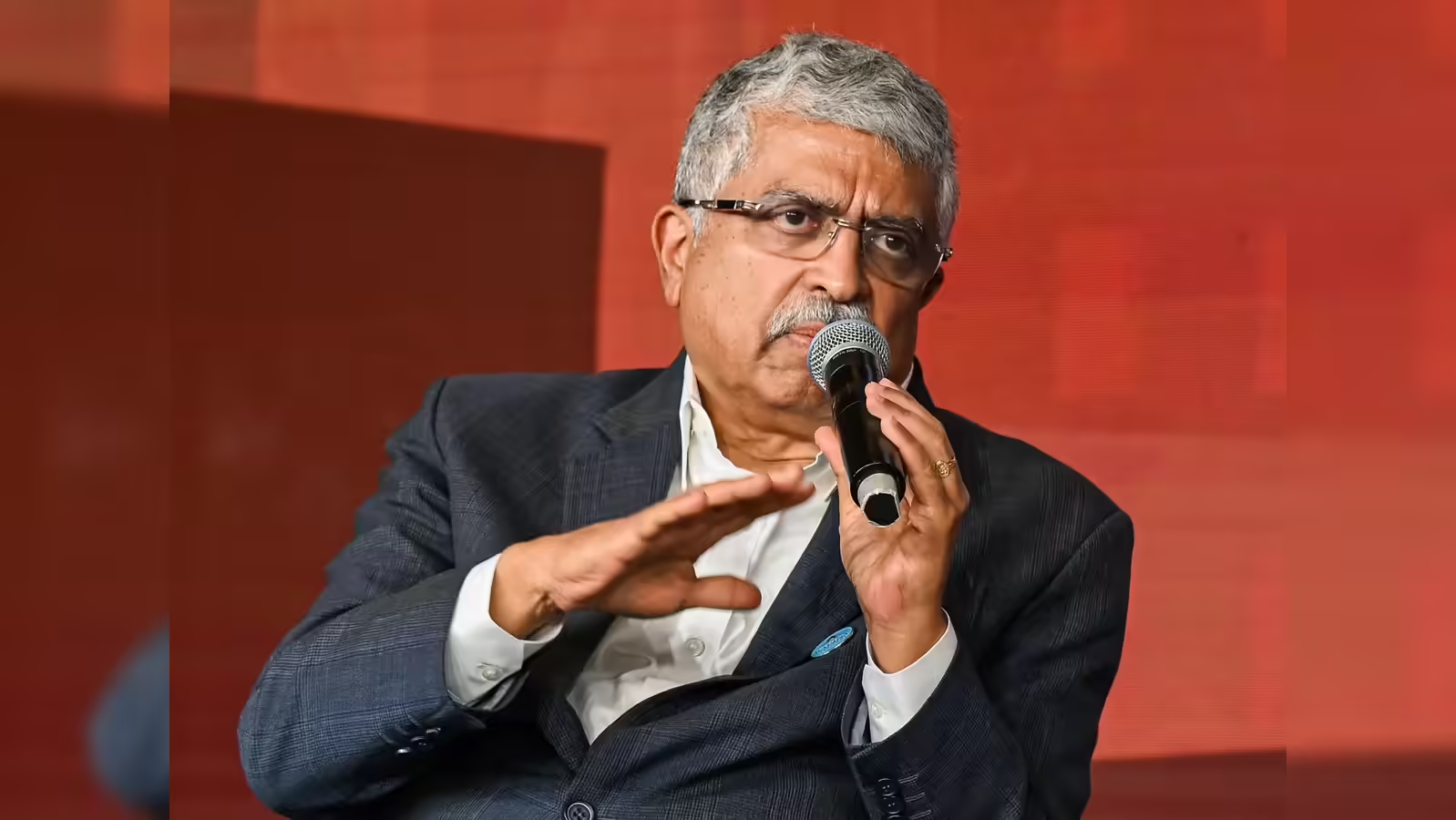
The Centre has constituted a six-member high-powered task force headed by Nandan Nilekani to recommend reforms for making NTA examinations secure, transparent and technology-driven following the NEET-UG 2026 paper leak. With experts from technology, education, intelligence and logistics, the panel is expected to propose measures such as AI-based monitoring, biometric verification, encrypted question paper management and stronger cybersecurity to restore trust in India's examination system.
By Mahima Katal
New Delhi, July 26: In the wake of the NEET-UG 2026 paper leak that reignited concerns over the integrity of India's examination system, the Union government has announced a high-powered task force headed by Infosys co-founder and former UIDAI Chairman Nandan Nilekani to recommend reforms aimed at making national-level examinations secure, technology-driven and trustworthy.
Prime Minister Narendra Modi announced the panel on July 26 through an Instagram reel, describing the proposed reforms as an effort to create an examination system that is "trusted, transparent and tech-savvy." The task force will primarily focus on overhauling the National Testing Agency (NTA), which conducts some of India's largest entrance examinations, including NEET, JEE Main, CUET and UGC-NET.
The announcement comes just a day after former Union Education Minister Dharmendra Pradhan resigned following mounting political pressure over the NEET-UG controversy, with Pralhad Joshi assuming charge of the Education Ministry.
Why This Task Force Matters
The NEET paper leak is only the latest in a series of examination scandals that have exposed systemic vulnerabilities in India's testing ecosystem. Over the past several years, multiple competitive examinations, including recruitment tests and university entrance exams—have been marred by allegations of paper leaks, impersonation, organised cheating and logistical failures.
Rather than merely investigating individual leaks, the government now appears to be shifting towards structural reform by bringing together experts in digital infrastructure, cybersecurity, intelligence, logistics and education administration.
The composition of the panel suggests that the government intends to redesign the entire examination lifecycle, from question paper creation to candidate authentication and post-exam analytics.
What Reforms Could the Task Force Recommend?
End-to-End Digital Security
One of the most significant reforms is expected to be the introduction of secure digital public infrastructure for examinations.
Instead of relying heavily on physical printing and transportation of question papers, the panel may recommend encrypted digital transmission systems with strict access controls, audit trails and real-time monitoring.
Advanced encryption could ensure that question papers remain inaccessible until the authorised examination window opens.
AI-Based Risk Detection
Artificial intelligence is likely to become a central feature of future examinations.
Using machine learning, authorities may be able to detect suspicious candidate behaviour, unusual examination centre patterns, abnormal score distributions and coordinated cheating networks.
Predictive analytics could also identify vulnerable examination centres before the examination is conducted.
Stronger Candidate Authentication
Impersonation has remained a recurring problem in competitive examinations.
The task force is expected to recommend biometric verification, facial recognition, Aadhaar-linked authentication and multi-factor identity verification to ensure that only genuine candidates appear for examinations.
These technologies are already used in various government digital platforms and could now become standard for high-stakes entrance examinations.
Secure Question Paper Management
Paper leaks often occur during printing, storage or transportation.
The committee is likely to examine reforms such as:
Digital question paper vaults
Time-locked encrypted downloads
Limited-access authorisation systems
Real-time monitoring of paper access
Tamper-proof digital logs
Such measures could significantly reduce human intervention in the examination process.
Better Logistics and Supply Chain
The inclusion of logistics expert Amrit Lal Meena indicates that physical movement of examination material will also come under scrutiny.
Recommendations may include GPS-enabled tracking of sensitive examination material, standardised custody protocols and improved coordination between central agencies, state authorities and examination centres.
Cybersecurity Standards
With examinations becoming increasingly digital, cybersecurity will become equally critical.
The task force could propose mandatory cybersecurity audits of examination platforms, vulnerability testing, secure cloud infrastructure and continuous monitoring to prevent hacking attempts.
Why Nandan Nilekani?
Nandan Nilekani has repeatedly been entrusted with building India's largest digital public infrastructure projects.
As the founding chairman of UIDAI, he led the development of Aadhaar, which transformed identity verification across government services. He also played a major role in shaping the digital architecture that enabled the Unified Payments Interface (UPI), now regarded as one of India's most successful digital innovations.
His previous roles include:
Chairing the RBI Committee on Deepening Digital Payments (2019)
Leading work on Digital Public Infrastructure under India's G20 presidency
Serving on the Supreme Court's Artificial Intelligence Committee
Mentoring the India Energy Stack initiative
His appointment signals that the government may seek a technology architecture comparable to Aadhaar or UPI for examinations.
Why the Other Members Matter
The composition of the six-member panel reflects an effort to address examination reform from multiple dimensions.
S. Somanath, former ISRO Chairman, brings expertise in mission-critical systems engineering, reliability and complex technology management.
Tapan Deka, Director of the Intelligence Bureau, adds experience in intelligence gathering, counter-terrorism operations and threat assessment—critical for tackling organised examination leak networks.
Dr. V. Kamakoti, Director of IIT Madras and a cybersecurity expert, is expected to contribute to secure computing systems, indigenous technology and AI integration.
Anita Karwal, former Union Education Secretary and ex-CBSE Chairperson, provides institutional knowledge of school and higher education examinations, having played a key role in implementing the National Education Policy (NEP) 2020.
Amrit Lal Meena, an experienced administrator with expertise in logistics and infrastructure planning, could help strengthen examination supply chains and operational protocols.
Will Technology Alone Solve India's Exam Crisis?
While technology can significantly reduce vulnerabilities, experts caution that examination reforms cannot rely solely on digital solutions.
Paper leaks often involve organised criminal networks, insider collusion, inadequate institutional accountability and weak enforcement mechanisms.
Any lasting reform will likely require:
Strong legal accountability for officials involved in examination misconduct
Independent security audits of examination agencies
Better coordination between central and state governments
Regular cybersecurity testing
Transparent grievance redress mechanisms
Swift criminal investigation and prosecution in leak cases
Technology may make cheating harder, but institutional integrity remains equally important.
A Turning Point for the NTA?
The creation of Nilekani's task force represents the government's most ambitious attempt yet to rebuild confidence in India's examination system after repeated controversies.
If its recommendations result in comprehensive digital infrastructure, stronger cybersecurity, secure logistics and institutional reforms, they could fundamentally transform how national examinations are conducted.
However, the success of the initiative will ultimately depend not only on the sophistication of the technology adopted but also on effective implementation, administrative accountability and public trust.
For millions of students whose futures depend on competitive examinations each year, the credibility of the examination process is as important as the examination itself. Whether this task force delivers that credibility will determine whether it becomes another committee—or the beginning of a new era in India's examination system.