Saudi: Fresh Strike Hits Riyadh Airport A Day After Deadly Missile Attack
Riyadh airport faces a fresh projectile strike a day after a deadly missile attack killed 12 people and injured over 300.
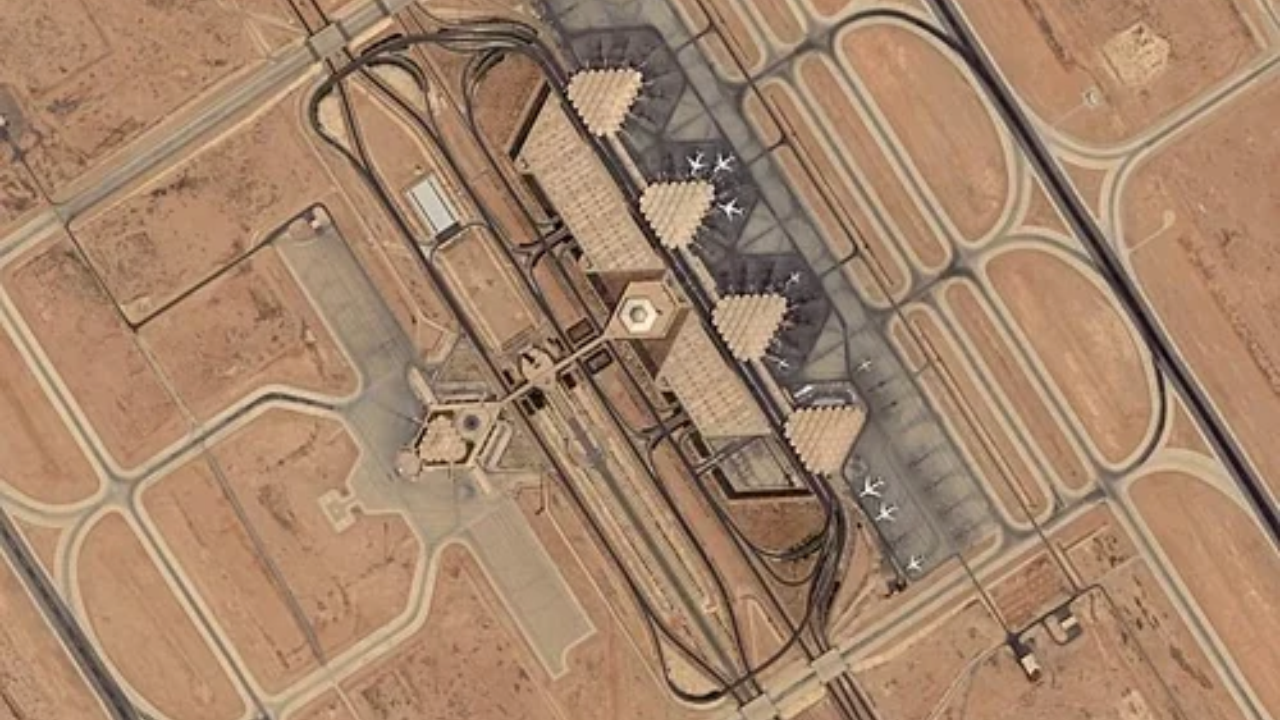
Riyadh airport faces a fresh projectile strike a day after a deadly missile attack killed 12 people and injured over 300.
By Pranjal Gupta
New Delhi, October 11: A Saudi-led coalition fighting Iran-backed Houthi rebels in Yemen said a projectile struck a passenger terminal at Riyadh’s King Khalid International Airport, less than a day after a missile attack killed 12 people and injured more than 300. There were no immediate details about the latest strike, which reportedly hit the same complex housing Terminals 3 and 4, used for domestic flights.
The airport remained closed on Sunday following Saturday’s deadly attack, which marked a major escalation in the conflict between Saudi Arabia and the Houthis. The latest developments have also added to uncertainty over efforts to end the ongoing war between the United States and Iran.
US President Donald Trump said he was considering whether Washington should join Saudi Arabia’s military strikes against the rebels. If the US gets involved, the Houthis may target shipping through the Bab el-Mandeb Strait, a key maritime route, and further disrupt oil supplies from the Persian Gulf.
Later on Sunday, the Houthi-run health ministry reported that a child had died and six people had suffered injuries in a suspected Saudi airstrike on a house in Yemen’s capital, Sanaa. Saudi authorities did not immediately comment on the reported strike.
The ministry said Saudi-led coalition attacks had killed 91 Yemenis and injured 168 over the past five weeks. It added that women and children accounted for 60% of those killed.
King Khalid International Airport in Riyadh remained closed after a deadly missile attack, followed by reports of another projectile strike on Sunday. (Representative Image, Source: Wikimedia Commons)
Riyadh Closes Airport and Shifts Schools Online
Saudi authorities announced on Sunday that schools in Riyadh would conduct classes online until the end of the week. They also extended the closure of King Khalid International Airport until at least 9 pm on Sunday, according to flight-tracking website Flightradar24.
The Houthis did not immediately claim responsibility for Saturday’s airport attack. However, the group has previously acknowledged attacks on Saudi airports and oil installations. Brigadier General Yahya Saree, the Houthis’ military spokesperson, warned airlines, airport staff, workers and travellers against using Saudi airports or airspace, saying they could face further attacks.
In a statement on X, Saree said Saudi airports had become targets for the group’s forces. He exempted airports in the holy cities of Mecca and Medina from the warning. The attack drew condemnation from several Arab countries, including Iraq, Lebanon and Syria. United Nations Secretary-General Antonio Guterres and European Commission President Ursula von der Leyen also criticised the escalation.
“Attacks by Iran’s proxies are pushing the region into a spiral of violence,” von der Leyen wrote on X on Sunday. She said the attacks threatened important global transport and energy routes.
Details emerge about those killed in airport attack
The missile struck an airport complex that houses Terminals 3 and 4, which handle domestic flights, a regional official told The Associated Press. The official spoke on condition of anonymity because they were not authorised to speak to the media. According to a Saudi statement, the 12 people killed included four Saudi citizens and nationals of Bangladesh, Palestine, the United States, Egypt, Jordan, Syria and Sudan.
Several hospitals were treating the injured, the statement said. Egyptian state-run television identified one of the victims as Azza Ramzy, a 28-year-old flight attendant who worked for Saudi airline Flynas.
Another victim, Syrian national Buthaina Ahmad Oweida, was a widowed mother of four who had lived in Saudi Arabia for five years, a relative told the AP. The Syrian Embassy in Riyadh also identified her.
Her niece, Nisreen Oweida, said the 56-year-old came from Syria’s northern Idlib province and had left the country during the civil war. She was living in Mecca and had travelled to Riyadh to visit her sister. She was returning from that visit when the attack killed her, her niece said.
Trump weighs US military involvement
The airport attack is likely to increase pressure on Saudi Arabia’s allies, including the United States, to provide military support to the kingdom.
Trump said shortly after the attack that he was considering whether the US should join Saudi strikes against the Houthis.
“We’re going to look at it,” he said, adding that the administration had only recently learnt about the attack and would make a decision quickly.
Trump later said on Saturday that he planned to speak with Saudi Crown Prince Mohammed bin Salman. Asked whether the US might become directly involved in the conflict, he replied, “We’ll find out.”
A US military intervention would deepen Washington’s involvement in an unpopular regional conflict. The war has also created political difficulties for Trump’s Republican Party ahead of the upcoming US midterm elections.
Both Trump and Iran have maintained that the American election calendar would not influence their decisions on ending the seven-month-old conflict.
The Houthis had also claimed attacks earlier in the week on King Khalid International Airport
that killed three Saudis, including a pilot. The airport does not have military facilities, according to the report.
The latest wave of attacks has targeted Saudi airports, military facilities and oil infrastructure. The escalation follows a major offensive launched by a Saudi-led coalition against the Houthis last week.