Monsoon Session 2026: A High-Stakes Test for Government and Opposition
The Monsoon Session 2026 is expected to witness heated debates as the INDIA bloc targets the Centre over Ram temple donation allegations, the NEET paper leak, SIR electoral roll revision, unemployment and constitutional reforms. By Mahima Katal News Delhi, July 13: The Monsoon Session of Parliament, scheduled from July 20 to August 13, is shaping up to be one of the most politically charged sessions since the 2024 general election. With several contentious issues converging at once, both the...
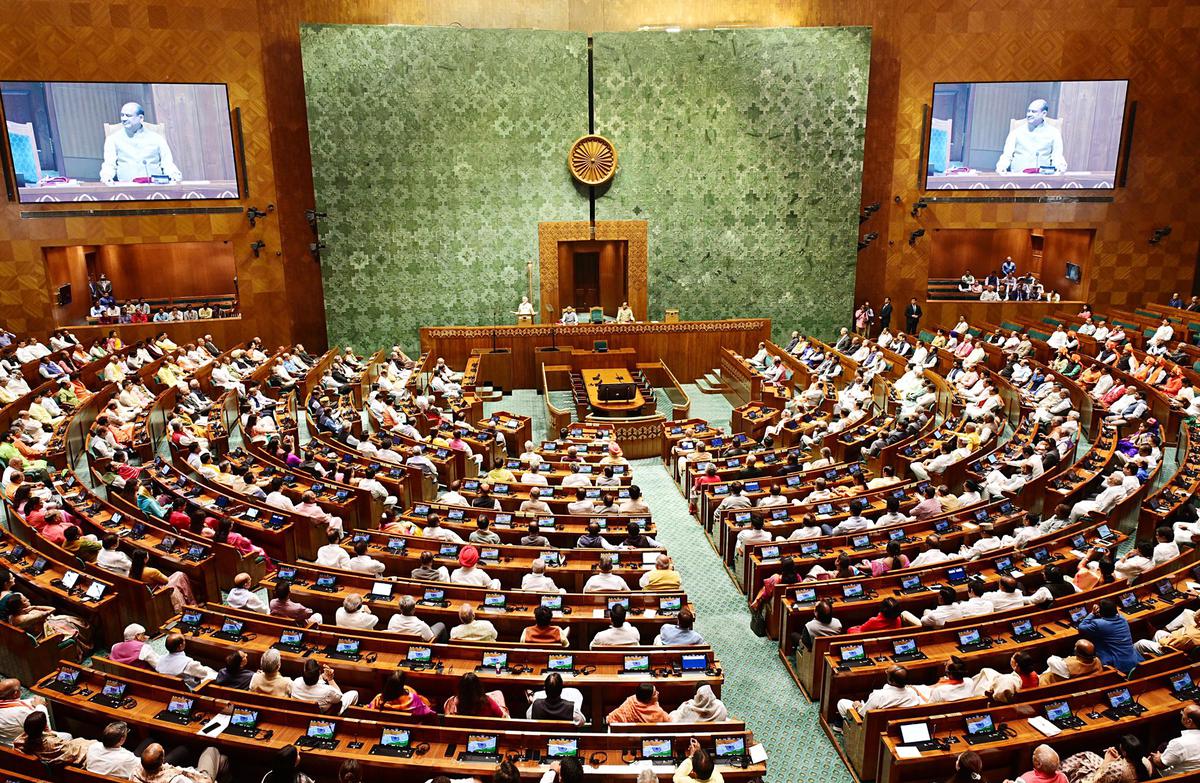
The Monsoon Session 2026 is expected to witness heated debates as the INDIA bloc targets the Centre over Ram temple donation allegations, the NEET paper leak, SIR electoral roll revision, unemployment and constitutional reforms. By Mahima Katal
News Delhi, July 13: The Monsoon Session of Parliament, scheduled from July 20 to August 13, is shaping up to be one of the most politically charged sessions since the 2024 general election. With several contentious issues converging at once, both the government and the opposition are expected to use Parliament as the primary battleground ahead of crucial state elections.
The latest indication of the opposition's strategy came from RJD MP Sudhakar Singh, who said the INDIA bloc would jointly target the Centre over issues including the alleged Ram temple donation irregularities, the NEET paper leak controversy, the Special Intensive Revision (SIR) of electoral rolls, unemployment and corruption.
His remarks reflect a broader attempt by the opposition to frame the session around questions of democratic accountability rather than isolated policy disputes.
Opposition's Core Agenda
According to Singh, the INDIA bloc intends to raise multiple issues simultaneously instead of allowing parliamentary debate to remain confined to government legislation.
Among the principal issues likely to dominate opposition interventions are:
Allegations relating to Ram temple donations.
The NEET paper leak and examination reforms.
The Election Commission's Special Intensive Revision (SIR) of electoral rolls.
Rising unemployment.
Corruption allegations.
Concerns over alleged defections from opposition parties.
The opposition is also expected to resist any attempt by the government to introduce legislation related to One Nation, One Election, delimitation or other electoral reforms that it believes could alter India's constitutional and political framework.
The Constitutional Narrative
Since the 2024 Lok Sabha elections, several opposition parties have increasingly framed their politics around protecting constitutional institutions.
Singh argued that attempts to weaken opposition parties through defections and administrative actions form part of a larger effort to reshape India's democratic structure. Similar arguments are likely to be echoed by other INDIA bloc leaders during debates.
Whether these claims gain wider political traction will depend on how the government responds inside Parliament and whether specific legislative proposals are introduced during the session.
SIR Likely to Trigger Heated Debate
One of the most closely watched issues could be the Election Commission's Special Intensive Revision (SIR) of electoral rolls.
Opposition parties have questioned the exercise, alleging that it could disenfranchise legitimate voters. The Election Commission, however, has maintained that electoral roll revisions are conducted to improve the accuracy of voter lists and ensure electoral integrity.
If discussions on electoral reforms are taken up, SIR is expected to become one of the session's most contentious subjects.
NEET Paper Leak Remains Politically Sensitive
The opposition also plans to keep the spotlight on the NEET paper leak controversy, arguing that repeated examination irregularities have undermined public confidence in India's recruitment and education systems.
Although investigations and administrative action have already followed earlier examination controversies, opposition leaders are expected to demand stronger accountability, systemic reforms and safeguards against future leaks.
Given the continuing public concern over competitive examinations, this issue could resonate beyond Parliament.
Ram Temple Donation Allegations
The opposition has indicated that it will raise questions regarding alleged irregularities linked to Ram temple donations.
The issue is politically significant because the Ayodhya Ram temple has remained one of the BJP's most important political and ideological achievements. Any parliamentary discussion is therefore likely to generate sharp exchanges between treasury and opposition benches.
Whether the matter results in a structured debate will depend on the Speaker's decisions and the parliamentary agenda.
Government's Legislative Priorities
While the opposition prepares an aggressive strategy, the government is expected to focus on its legislative programme, which may include pending Bills and governance-related reforms.
If proposals such as One Nation, One Election or measures connected to delimitation are formally introduced, they are likely to become flashpoints during the session.
Given the government's lack of a two-thirds majority required for constitutional amendments, any such proposal would require broader political consensus, making parliamentary negotiations crucial.
More Disruptions Than Legislation?
Recent Parliament sessions have frequently witnessed adjournments over politically sensitive issues.
With multiple contentious subjects already on the agenda, analysts expect:
Frequent opposition protests.
Repeated demands for discussions under rules allowing detailed debate.
Possible disruptions affecting legislative productivity.
Intense exchanges over constitutional institutions and electoral reforms.
The government's ability to balance legislative business with demands for debate will significantly shape the outcome of the session.
What to Watch During the Monsoon Session
The session will be closely watched for:
Whether Parliament debates the SIR exercise in detail.
Opposition strategy on the NEET controversy.
Discussions surrounding Ram temple donation allegations.
Any move towards introducing One Nation, One Election legislation.
Government responses to constitutional and electoral concerns.
The overall productivity of Parliament amid expected political confrontation.
The Bigger Picture
The Monsoon Session is unlikely to be defined by a single issue. Instead, it represents the intersection of electoral reforms, education, constitutional politics, governance and opposition unity.
For the BJP-led government, the challenge will be advancing its legislative agenda while responding to sustained political attacks. For the INDIA bloc, the session offers an opportunity to demonstrate coordinated opposition on issues it believes have national significance.
With both sides entering Parliament with sharply contrasting narratives, the coming weeks are expected to provide an important indication of India's evolving political landscape ahead of future electoral contests.