S-Duality, Black Holes, String Theory: Ashoke Sen’s Path to the First Indian With Oskar Klein
ICTS professor Ashoke Sen wins the Oskar Klein Medal for his string theory, S-Duality research; delivers memorial lecture at the AlbaNova University Centre in Stockholm.
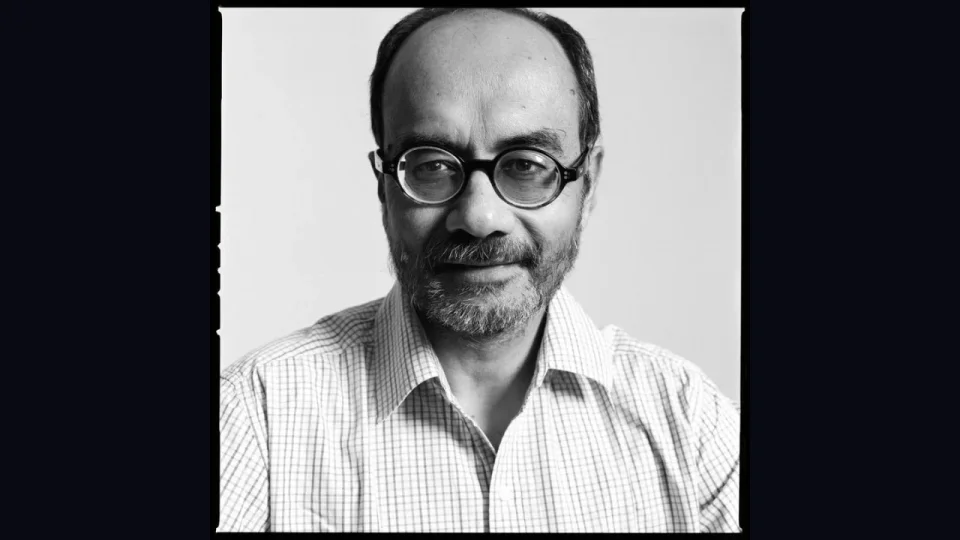
Professor Ashoke Sen, an ICTS-Infosys Madhava Chair Professor at the International Centre for Theoretical Sciences-Tata Institute of Fundamental Research (ICTS-TIFR) in Bengaluru, received the Oskar Klein Honour - an award given to distinguished contributions to theoretical physics, particularly in areas like string theory, cosmology, and particle physics. India’s Sen has been given the award for pioneering the Modern String Theory.
"Prof. Sen, an ICTS-Infosys Madhava Chair Professor, is internationally recognised for his pioneering work on S-duality, the precision counting of black-hole entropy and string field theory, all of which have helped shape modern string theory,” said ICTS in an official statement while appreciating Sen for the recognition.
Who is Ashoke Sen?
Born in Kolkata in 1956 to a former physics professor father, Sen's schooling was at Sailendra Sircar Vidyalaya in Kolkata. He later pursued undergraduate studies at Presidency College, where he earned his Bachelor of Science degree in 1975. During his undergraduate years, he was heavily inspired by the teachings of legendary physicist Amal Kumar Raychaudhuri (famous for the Raychaudhuri equation, which General Relativity relies upon). He subsequently earned his M.Sc. from the Indian Institute of Technology (IIT) Kanpur in 1978 and completed his PhD in theoretical physics at Stony Brook University, as per Academic biography archives
Congratulating him on the achievement, ICTS Director Rajesh Gopakumar said, “On behalf of all of us, very warm congratulations to Ashoke. It has been no less than wonderful having Ashoke with us and setting the tone for excellence here at ICTS”.
A Legacy of Pioneering Breakthroughs
Sen is the recipient of the Padma Shri in 2001 and the Padma Bhushan in 2013. His seminal theoretical breakthroughs were also recognised with the Breakthrough Prize in Fundamental Physics in 2012, which helped establish that different string theories are varied limits of a single underlying framework.
The Oskar Klein Honour
The award was established in 1988 in memory of Swedish theoretical physicist Oskar Klein and is presented annually by Stockholm University along with the Nobel Committee for Physics of the Royal Swedish Academy of Sciences. Each year, the organising committee invites an eminent researcher to deliver a memorial lecture and receive the medal.
Prof. Sen delivered his lecture, titled “Gravity from strings and strings from gravity,” on October 22 at the AlbaNova University Centre in Stockholm. His talk focused on how string theory leads to a consistent quantum description of gravity while addressing the puzzles about the quantum theory of black holes.
With this recognition, Prof. Sen joins a distinguished list of previous Oskar Klein Medal recipients, including Nobel Prize recipients Chen Ning Yang (1988), Steven Weinberg (1989), Hans E. Bethe (1990), and other prominent physicists such as Stephen Hawking (2003), Peter Higgs (2009), and Kip Thorne (2016).