Mass Fish Deaths Upstream of Delhi Barrage; Why Millions Relying on Yamuna Water May Be at Risk
Mass fish deaths near Delhi’s Wazirabad barrage have raised concerns over Yamuna pollution, deteriorating water quality despite the monsoon, and potential risks to drinking water supplies.
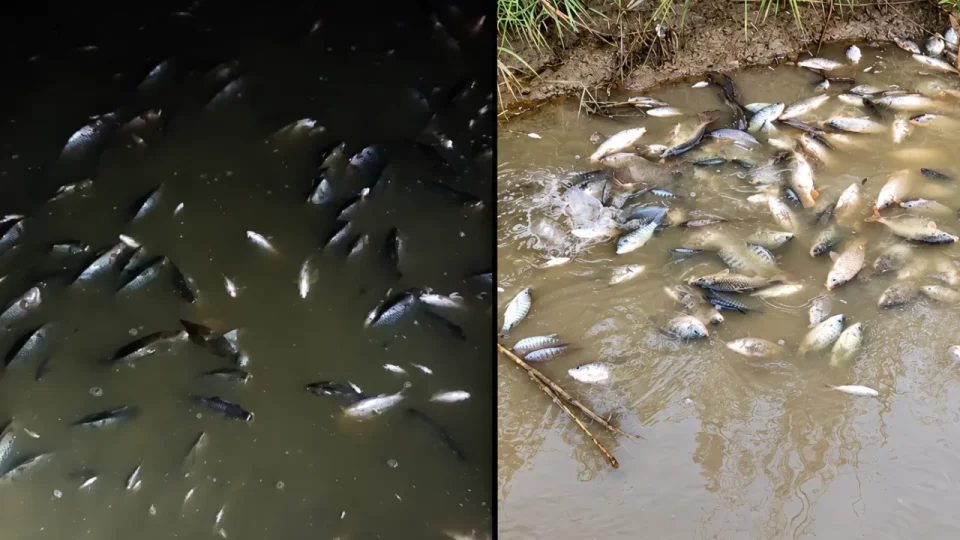
Reports of mass fish deaths near Delhi’s Wazirabad barrage have raised serious concerns about the health of the Yamuna and the safety of water supplied for drinking in the national capital. The timing of the incident has drawn particular attention, as the recent monsoon had raised hopes of improved water quality in the river.
Several media reports and environmental experts flagged a spike in pollution levels in September, raising questions about why water quality remains poor despite the monsoon. Over the past few days, fishermen had reported a foul smell emanating from the river before large numbers of dead fish were found floating in its main channel near Burari on Tuesday. The stretch, between Palla and Wazirabad, is often considered one of the cleanest sections of the Yamuna in Delhi.
Such incidents have frequently occurred during summer, when reduced river flows limit the dilution of pollutants. However, with monsoon flows having replenished the river, the latest fish deaths have raised questions about the possible causes of the fatalities.
The environmental group Earth Warrior has also raised concerns over the incident. In a letter to the Delhi Pollution Control Committee (DPCC), the group said the primary causes of fish deaths were widely recognised to include critically low levels of dissolved oxygen (DO), high biochemical oxygen demand (BOD), elevated faecal coliform counts, and toxic industrial and domestic effluents.
“Recent DPCC monitoring data has shown continuing deterioration in Yamuna water quality at multiple locations despite monsoon flows,” the group said.
MASS FISH MORTALITY IN YAMUNA Repeated mass fish deaths in the Yamuna cannot become the "new normal." A formal letter has been sent to the Delhi Pollution Control Committee (DPCC) demanding strict actions against toxic industrial effluents and unauthorized drains polluting our water. Delhi's citizens deserve safe drinking water and a thriving ecosystem. Read the full appeal below. @DPCC_Pollution
— Earth Warrior (@Earthworri1) October 15, 2026
The recurring deaths in what is considered a “relatively cleaner stretch” of the river are particularly disturbing, said Bhim Singh Rawat of the South Asia Network on Dams, Rivers and People. “If this is from pollution, then adverse effects may impact Delhi’s potable water as well,” Rawat said, calling for an inquiry to establish the exact cause of the fish deaths, reported TOI.
Rawat identified restricted environmental flows and the discharge of untreated wastewater into the river as possible contributing factors. These include discharges from Drain No. 2 in Panipat and the Dhanaura drain in Haryana. Industrial pollutants could also be responsible, he said.
The incident follows the DPCC’s September water-quality analysis, which recorded high pollution levels at several locations. The findings included elevated biochemical oxygen demand and faecal coliform counts at the ISBT Bridge monitoring point. The DPCC’s response to the latest incident was not available at the time of publication.
When Pollution Becomes a Public Health Concern
The mass fish deaths raise a larger question about the quality of water drawn from the Yamuna for drinking purposes. If pollution levels are severe enough to cause fish deaths, the incident warrants scrutiny of the water quality upstream of the Wazirabad barrage and the effectiveness of treatment processes before the water reaches consumers.
However, fish deaths alone do not establish that the water supplied to households is unsafe. The actual risk to public health would depend on the pollutants involved, their concentrations and the effectiveness of treatment at the waterworks.
Hundreds, maybe thousands, of fish found dead on 14th October in the Yamuna river near Burari, Delhi. Specific cause not established. Locals allege chemical waste discharged from Haryana through canals. Could it be related to the acid rain on Oct 12th? @lifeindia2016 @mssirsa @gupta_rekha @bahardutt @Earthworri1 @CPCB_OFFICIAL @DPCC_Pollution @LtGovDelhi @Bharati09 @byadavbjp @CMODelhi @moefcc @GargiRawat @jayashreenandi @JamwalNidhi @CSEINDIA @chetanecostani @htdelhi @ndtvfeed
— New Delhi Nature Society (@NDNS_HQ) October 15, 2026
The Wazirabad water treatment plant supplies drinking water to several parts of Delhi, serving millions of residents across North, Central and West Delhi. The incident therefore raises questions about whether the authorities are adequately monitoring the river and identifying pollution sources, particularly in stretches from which water is drawn for treatment.
Major Localities and Areas Supplied
North and North-West Delhi
-
Burari
-
Model Town
-
Jahangirpuri
-
Badarpur Majra
-
Timarpur
-
Mukherjee Nagar
-
Civil Lines
West and Central Delhi
-
Punjabi Bagh
-
Shakur Basti
-
Karol Bagh
-
Sanjay Gandhi Transport Nagar
-
Patel Nagar
Old Delhi, NDMC and South-Central Areas
-
Parts of Old Delhi, including the Chandni Chowk area
-
Parts of the New Delhi Municipal Council (NDMC) area and Delhi Cantonment, which may receive water through the interconnected distribution network depending on supply arrangements.