Jamia Student Polls After 20 Years: What Kept Elections on Hold?
Following two weeks of intense student hunger strikes and campus demonstrations, Jamia Millia Islamia (JMI) has officially announced the restoration of its Student Union elections after a 20-year freeze. The university dissolved the central union on March 31, 2006, citing severe campus altercations, faculty clashes, and academic disruptions.
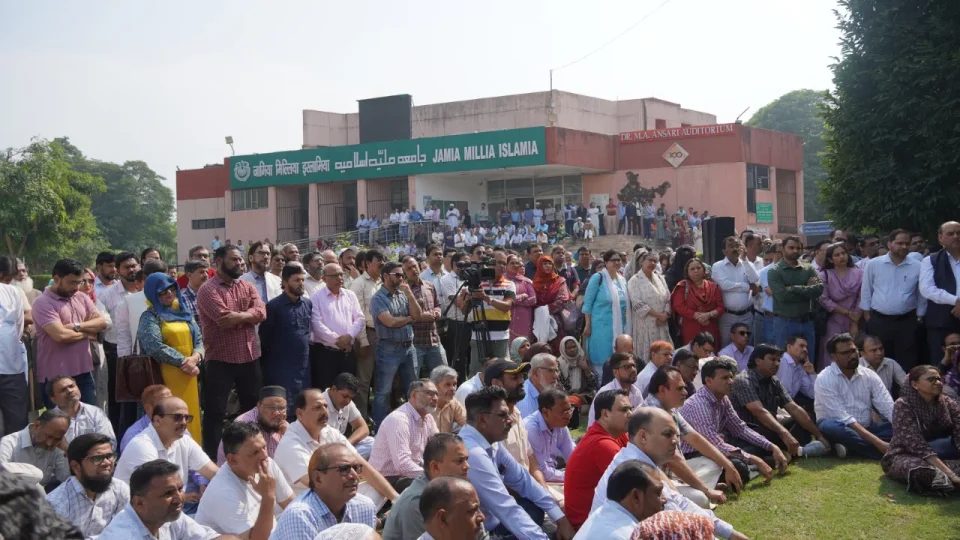
Jamia Student Union Election: Jamia Millia Islamia (JMI) has resumed the electoral process for student unions two decades after it put central elections on hold in view of physical altercations and student rivalries. On Monday (October 26), the administration announced that the elections will be held within 15 days, giving major relief to the students who were sitting on a hunger strike for nearly two weeks, setting up their tents in the Ghalib lawns near Gate 7 of the campus.
For nearly twenty years, while neighboring universities like Delhi University (DU) and Jawaharlal Nehru University (JNU) held political campaigns, banners, and debates during standard election seasons, the central lawns of Jamia Millia Islamia (JMI) remained quiet. Putting forth the demand to resume elections, several students staged a protest for days, eventually gaining attention when clashes with the Delhi Police occurred on Saturday (October 24). By that time, the administration had held a couple of meetings with the demonstrators, but nothing conclusive had happened. The protest continued despite the students facing mounting pressure of being suspended. Protestors alleged that security guards tried to remove them forcibly, an incident that the university has now taken action against.
But what exactly happened in 2006 that prompted the university to suspend the elections altogether?
The Catalyst: March 2006 Dissolution
The last university-wide student election at Jamia Millia Islamia took place in 2005. On March 31, 2006, the university administration officially dissolved the Jamia Millia Islamia Students’ Union (JMISU).
The immediate reasons for the suspension centered on campus stability and safety:
-
Escalating Campus Violence: The administration cited repeated instances of violent altercations, physical clashes between rival student groups, and incidents targeting faculty and university officials.
-
Disruption of Academic Calendar: Factional conflicts surrounding union politics caused frequent disruptions to classes, examinations, and administrative operations.
-
Administrative Confrontations: Tensions between student union leaders and university administration over admissions policies and campus discipline reached a breaking point, prompting executive intervention.
Fearing that central political campaigns compromised the core academic environment, the university’s Executive Council opted to disband the centralized union.
Also Read: Jamia Standoff: Poll Demand, ‘Free Kashmir’ Graffiti, Political Involvement and a Campus on Edge
Legal Deadlocks and Institutional Policy
Following the 2006 dissolution, the institutional freeze on central elections was reinforced by both legal proceedings and policy frameworks:
1. Statutory Discretion Under the JMI Act
The university operates under the Jamia Millia Islamia Act, 1988. Statute 27 of the Act grants the university authority over student discipline and campus welfare. Whichever administrator came, maintained that holding centralised union elections remained dependent on ensuring a secure academic environment, exercising their discretionary power to withhold general elections.
2. Legal Challenges in the Delhi High Court
For years, students and alumni filed petitions in the Delhi High Court to seek its intervention for allowing the students polls. But, the university argued that the prevailing environment on the JMI campus is not codusive to fecilititate political campaigning at the moment. In the legal back-and-forth, the status quo remained intact.
3. The Lyngdoh Committee Standards
Following the campus clashes and confrontations, the Supreme Court of India formed the Lyngdoh Committee to lay down guidelines of campus elections campaigning, including spending limits, attendance requirements, and strict rules against violence in unviersities across the nation. It was headed by James Michael Lyngdoh (J. M. Lyngdoh), a former Chief Election Commissioner (CEC) of India who had retired in 2004.
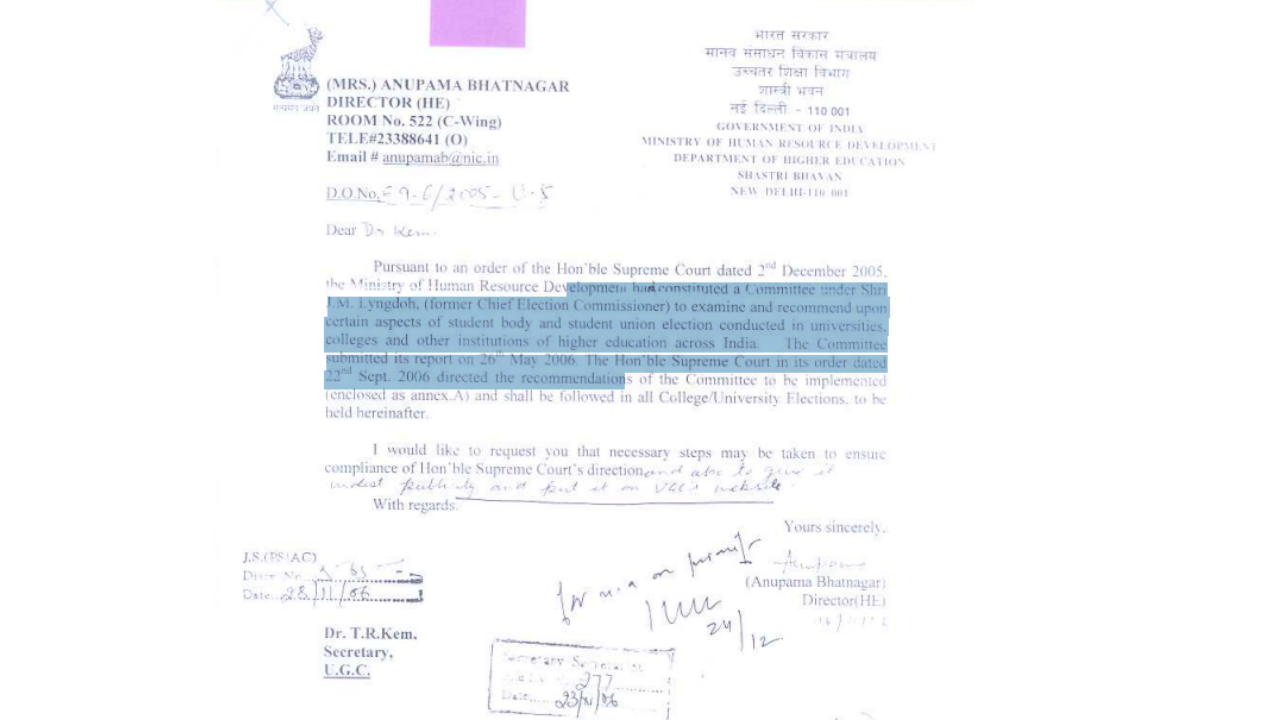
Whenever asked to revive the elections, Jamia pointed to difficulties in ensuring total compliance with these regulations amid potential security risks as grounds for maintaining the suspension.
Shift to Departmental Associations
Instead of leaving students entirely without a platform, the university created a new framework. While the centralised political union was put on hold, students were asked to work for Departmental Subject Associations.
Under this system, students elected class representatives and department-level office bearers (such as Vice Presidents and Secretaries) via secret ballot. Governed directly under the supervision of the Dean of Students' Welfare (DSW), these bodies addressed localised academic and administrative issues without organising as a central political bloc.
Path Toward Restoration
The univesity engaged students in departmental activities, but stduents continued to advocate for the centralised university-wide policy, housing, and administrative decisions. Days after hunger strike, fresh confrontation with security guards and police personnel, failing negotiation by professors, Jamia issued a notice, agreeing to the demands of the students.
Office of the Chief Public Relations Officer, JMI https://t.co/S0ydd6j8xo
— Jamia Millia Islamia (NAAC A++ Grade Central Univ) (@jmiu_official) October 26, 2026
On Monday, persistent campus advocacy led the university administration to initiate a formal process to restore central student elections. The administration agreed to hold fresh union elections within 15 days following the final approval of a newly drafted Student Union Constitution - marking a transition back toward democratic campus representation.