El Niño Threatens Telangana Crops; State Urges Farmers to Avoid Paddy, Cotton
Telangana warns farmers against paddy and cotton cultivation as El Niño threatens rainfall, water availability, agricultural output and power supply.
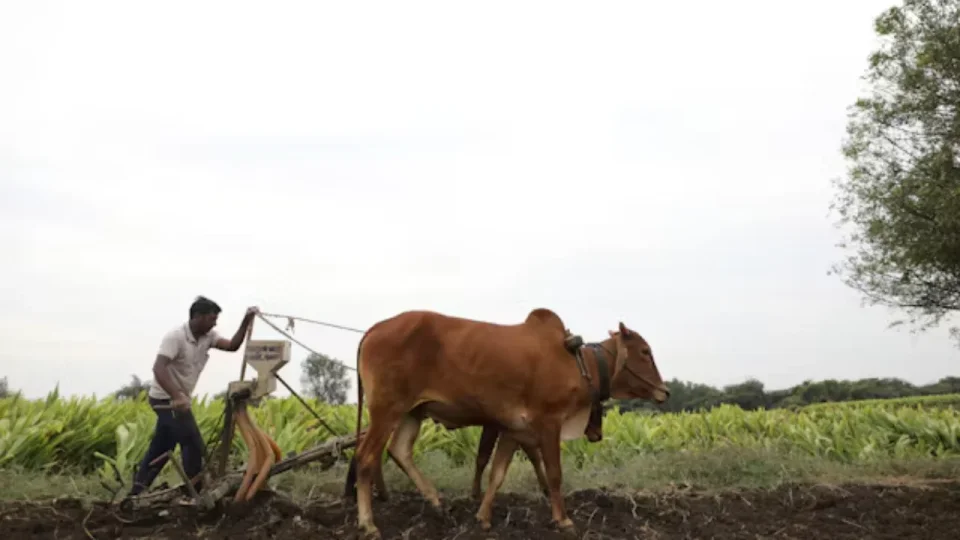
With neighbouring Andhra Pradesh declaring 56.4% drought this year, Telangana on Monday urged its farmers to mindfully use water and energy sources. The state has already recorded a significant rainfall deficit this year and the El Niño effects are expected to worsen the situation ahead. According to a press release, Chief Secretary Sanjay Jaju, Deputy Chief Minister Mallu Bhatti Vikramarka, and Ministers Tummala Nageswara Rao and Ponnam Prabhakar communicated via video conference with district collectors, department officials, and farmers at Rythu Vedikas throughout the state to discuss ways to handle with the situation.
Speaking during the conference, Vikramarka stated that the World Meteorological Organization's assessments suggested that El Niño's effects would peak by December and that the ensuing circumstances might last until 2027.
He said several parts of the world could face high temperatures and low rainfall, affecting both the public and farmers.Also said that there were no clear indications of rainfall in Telangana until June or July next year.
In view of the situation, the state’s available water resources should be reserved exclusively for drinking-water needs, he said.All government departments should work together to address potential drinking-water shortages and food-grain scarcity, while ensuring adequate fodder and water for livestock, he added.
Vikramarka said the state government was taking planned measures and creating awareness among farmers about necessary precautions based on recommendations from agricultural scientists. Agriculture Minister Tummala Nageswara Rao advised farmers against cultivating paddy and cotton during the current rabi season.He recommended rain-fed and short-duration crops, adding that seeds for rain-fed crops were being supplied at subsidised prices.
Farmers should opt for crops that require less water and can be harvested within a short period, he said. Warned that temperatures could reach 50 degrees Celsius this year and said 315 mandals had already recorded very low rainfall. He urged the Irrigation, Agriculture, Energy, Panchayat Raj, Animal Husbandry, Groundwater Resources and Revenue departments, among others, to create awareness among farmers about the challenges posed by El Niño.
He announced that an emergency Cabinet meeting would be convened to discuss the situation and the possibility of sending a high-level delegation to the Centre. The area under paddy cultivation in the state had declined by around 15 lakh acres, he said, advising farmers to protect standing crops and cultivate pulses, oilseeds and short-duration crops during the rabi season.
Sanjay Jaju said the state had recorded a rainfall deficit of around 20 per cent compared with the previous monsoon season, with all 33 districts receiving below-normal rainfall. He said inflows into the Krishna basin stood at only 80 Thousand Million Cubic feet (TMC), against an expected 270 TMC, while the Godavari basin had received 100 TMC, compared with 150 TMC.
Given the current availability of water in the state, there was no scope to supply water for agricultural purposes, he said, adding that ensuring drinking-water supplies over the next 10 months would be the government's highest priority. Providing fodder and water for livestock would also be a priority, he said.
Special 'War Room' for El Niño Conditions
Special war rooms would be established at the state and district levels to monitor El Niño conditions and issue appropriate guidelines. Jaju said works under the VB-G RAM G (Viksit Bharat – Guarantee for Rozgar and Ajeevika Mission (Gramin)) scheme, a rural employment guarantee programme, were being undertaken on a large scale to address drought-like conditions.
Meteorological department official Sravanthi said El Niño was contributing to deficient rainfall and rising temperatures. She warned that conditions could become more concerning in November and December, with temperatures that would normally be around 35 degrees Celsius potentially rising to 37 degrees Celsius.
She cautioned that the upcoming northeast monsoon was unlikely to significantly improve the situation.
Naveen Mittal, Special Chief Secretary (Energy), said electricity was not readily available for purchase from other sources amid the nationwide impact of El Niño. He stated that electricity output in the state this year was only about 25% of previous year's level due to inadequate water in reservoirs. Electricity consumption reached a record 19,892 megawatts on September 30, a level not previously recorded, he added.
The warm phase of a natural climate cycle called El Niño elevates sea surface temperatures in the tropical Pacific, causing weather variations that can exacerbate human-caused global warming and heighten the risk of droughts and floods.
(With PTI Inputs)