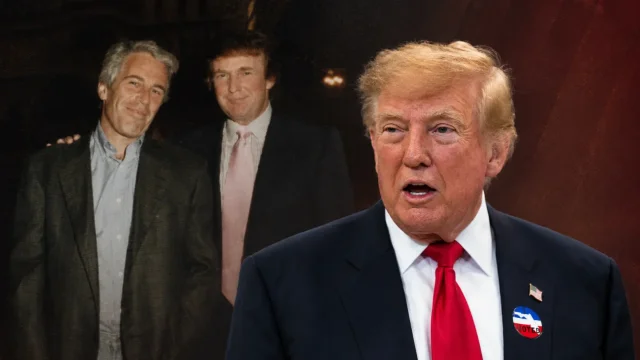
Trump’s Anti-Muslim Rhetoric Leaves 2024 Muslim Supporters Feeling Betrayed
Trump Anti-Muslim Rhetoric Alienates Arab Voters: Trump’s attacks on Michigan’s Abdul El-Sayed and Somali immigrants trigger a wave of fear and betrayal among Arab and Muslim American voters who backed him in 2024.
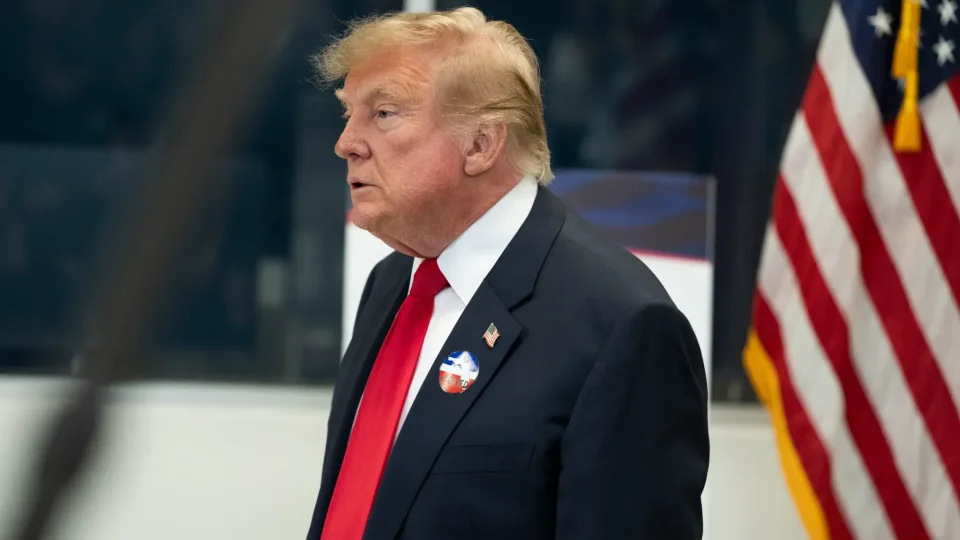
Trump Anti-Muslim Rhetoric Alienates Arab Voters: US President Donald Trump has intensified campaigning for Republican candidates ahead of the US midterm elections, with anti-Muslim rhetoric increasingly featuring in his attacks on political opponents and minority communities. He has reportedly called Michigan Democratic Senate candidate Abdul El-Sayed a “vicious, violent jihadist”, vilified Somali Americans in Minnesota and publicly praised Laura Loomer, a self-described Islamophobe. The remarks have left some Muslim and Arab American voters who backed him in 2024 feeling betrayed.
Air Force One with 45-47 ✈️ 🇺🇸 My favorite President. https://t.co/5os4E0OPak
— Laura Loomer (@LauraLoomer) October 2, 2026
El-Sayed, who would become the first Muslim to serve as a US senator if elected, has denied any links to extremist groups and described attacks on his loyalty as “shameful”. Bishara Bahbah, who led Arab Americans for Trump during the 2024 presidential campaign, has called the president’s comments “racist” and said they crossed “a red line”, said a report by the Associated Press.
The backlash is particularly significant in Michigan and Minnesota, both home to sizeable Muslim and Arab American communities. In 2024, Trump won Dearborn, Michigan, becoming the first Republican presidential candidate to carry the city since 2000. Many voters there had turned against the Biden administration over its handling of the war in Gaza.
But the political alliance that helped Trump make gains among these voters is now under strain. The New York Times reported that some residents of Dearborn describe a growing climate of fear. Hassan Nehme, who served as a Michigan Republican Party vice chair in 2024 and helped Trump reach Muslim and Arab American voters, said: “My whole community is scared… It’s post-9/11 in Dearborn.”
Political Convenience or a Shift in Strategy?
Trump’s latest remarks have raised questions about whether his outreach to Muslim voters in 2024 was driven more by electoral calculations than a lasting political commitment. During that campaign, Trump promised Muslim voters: “The Muslim community was there for us in November, and while I’m president, I’m going to be there for you,” added the media report.
Yet, earlier this month, Trump hosted Loomer, who describes herself as a “proud Islamophobe”, aboard Air Force One and praised her as a “great Republican strategist”. Loomer subsequently posted a photograph from the flight on October 2, 2026, calling Trump her “favorite President”. The contrast has fuelled anger among some of the voters and campaigners who helped Trump make inroads into communities that have traditionally leaned towards Democrats.
Bahbah, whose organisation is now called Arab Americans for Peace said that Trump had “managed to alienate the Arab and Muslim communities, and they will not vote Republican”. Nehme also questioned the value of remaining within a party whose rhetoric, he believes, is turning against the very communities he helped bring into its fold. “What’s the point if my own party is going to play against us?” he said.
Michigan Becomes a Centre of Attention
At a rally in Port Huron, Michigan, on Sunday, Trump escalated his attacks on El-Sayed, calling him a “jihadist”, accusing him of being “on the side of the terrorists,” and suggesting he should “go through a metal detector” before entering the Senate. Trump also repeatedly invoked the September 11 attacks, AP reported. He extended his criticism to Democratic Representative Ilhan Omar of Minnesota, saying he had come to Michigan “to keep a jihadist Muslim Brotherhood member from becoming a United States senator”.
Trump also targeted former US president Barack Obama and El-Sayed in the same Truth Social post published on Sunday. He described Obama as a “grossly incompetent President” and labelled El-Sayed a “Muslim Brotherhood Jihadist” and a “Fake Doctor”, while urging Michigan voters to support Republican Senate candidate Mike Rogers.
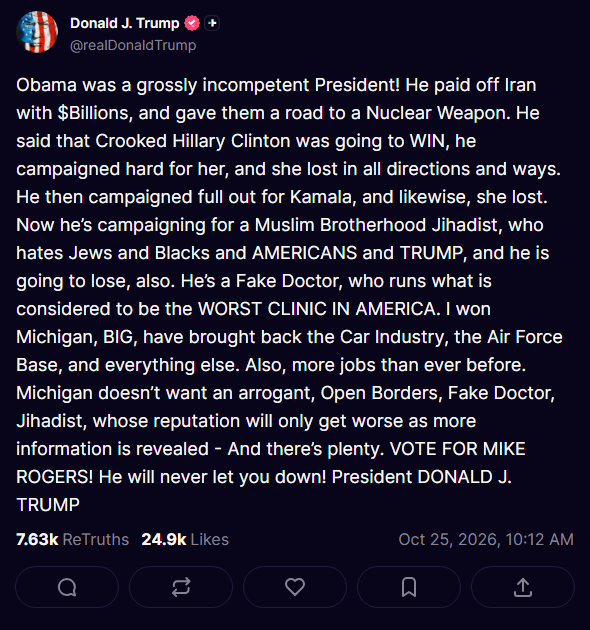
Obama has backed El-Sayed, who is campaigning on issues including universal healthcare. El-Sayed has invoked the former president’s legacy in his own campaign, writing on October 27: “Let’s finish what he started and guarantee healthcare for every American.” There is no evidence that El-Sayed is affiliated with the Muslim Brotherhood, AP reported. Trump’s accusations have therefore placed the candidate’s alleged religious and political associations at the centre of the campaign without publicly established evidence of the claimed links.
Obama in support of ElSayed:
OUR 44th president. Let's finish what he started and guarantee healthcare for every American. 🇺🇸 https://t.co/aWcolg9ziY
— Dr. Abdul El-Sayed (@AbdulElSayed) October 27, 2026
El-Sayed responded at a rally in Grand Rapids with a defiant message, saying: “I don’t even care that he remembers my whole name because he can just go on and call me ‘senator’ after November… I will be Senator Muhammad to you, bro.”
Fear Beyond the Campaign
Trump’s rhetoric has also targeted Somali Americans in Minnesota, where a welfare fraud scandal involving members of the community has become a political flashpoint. Trump has described Somali Americans as “garbage” and said they should “go back to where they came from”. He has also claimed that Minnesota is “being taken over by Somali immigrants” and urged residents to “fight back”.
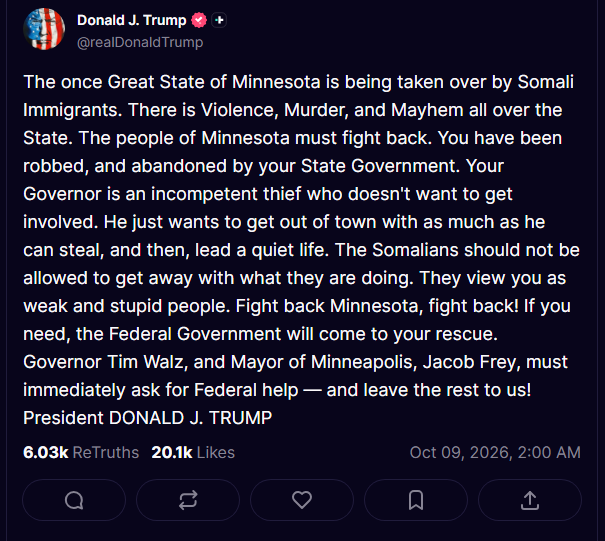
The remarks have prompted concerns among Muslim community leaders about the safety of mosques and their congregations. Local imams met to discuss mosque security following Trump’s comments, The NYT reported. “These words are reckless,” Imam Abdulahi Farah said at a news conference alongside other Muslim faith leaders in Minneapolis. “They are dangerous, and they have consequences… Blaming an entire community is not accountability. Scapegoating is not a public safety strategy.”
The concerns extend beyond the political implications of the remarks. By directing criticism at an entire community over a fraud scandal, Trump's language has raised fears among local leaders that individuals who have no connection to the allegations could also face hostility.
A Measurable Political Cost
The shift in support among Arab American voters could pose a challenge for Republicans ahead of the midterm elections. A Washington Post-Schar School poll cited by The NYT found that 58 per cent of registered Arab American voters supported Democrats for Congress this year, compared with 34 per cent who preferred Republicans. The figures suggest a reversal for a constituency that was divided between Trump and Democratic candidate Kamala Harris in the 2024 presidential election.
The White House has defended the president’s remarks. Spokeswoman Olivia Wales said Trump was “calling out the radical extremists stoking division, defrauding their communities and perpetuating violence” and would “continue to unapologetically fight for American greatness".
But the reaction from former Trump supporters suggests the dispute is about more than individual policy disagreements. For campaigners such as Nehme and Bahbah, the question is whether a community whose votes helped Trump secure victory in 2024 can continue to support a party whose president is now using rhetoric they consider hostile to it.
With the midterms approaching, Trump's strategy may energise some of his core supporters. But it also risks undoing the electoral gains he made among Muslim and Arab American voters less than two years ago.