Rubio Defends 60-Day Sanctions Pause, Says India Can't Shift Away From Russian Oil Overnight
Marco Rubio on India-Russia Oil Purchase: Marco Rubio says Trump’s 60-day pause on Russia sanctions will assess global economic risks, as India gains relief and lawmakers protest.
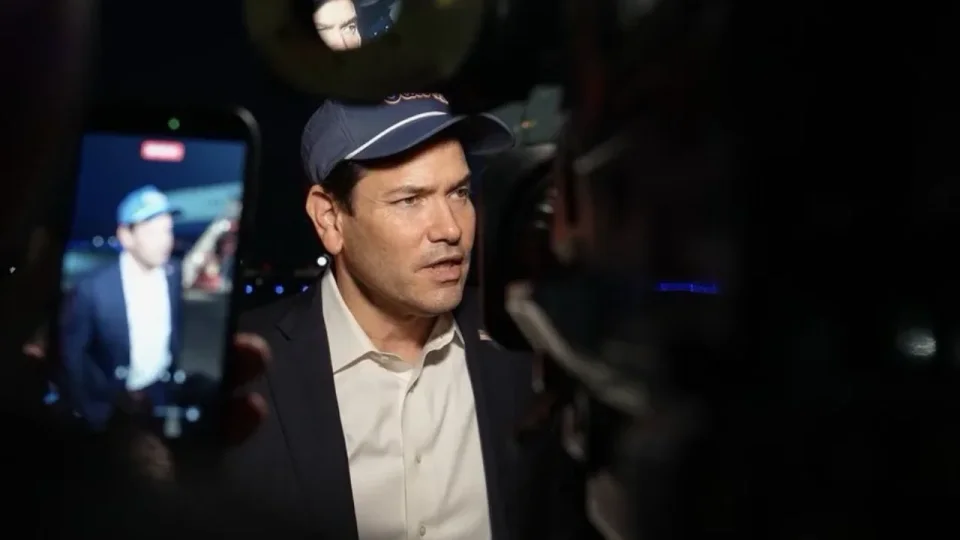
Marco Rubio on India-Russia Oil Purchase: US Secretary of State Marco Rubio has said the 60-day pause on sanctions against Russia and tariffs on countries buying Russian oil, including India, will allow the Trump administration to assess the impact of the measures on the global and US economies. Rubio made the remarks on Saturday evening at Joint Base Andrews, near Washington, as he left for a six-day tour of Uzbekistan and India. He is scheduled to arrive in India on Monday.
“I think the president wants to take the 60-day period of time to sort of analyse what imposing both sanctions and tariffs will mean to the global economy, and even to the US economy,” Rubio said. He was responding to questions about the waivers granted by US President Donald Trump under the Sanctioning Russia and Iran Act, also known as the Graham Act.
On Friday, Trump waived key provisions of the legislation, which authorised punitive tariffs on countries purchasing Russian oil. The decision offers relief to India, which continues to import a substantial amount of its energy supplies from Russia.
Trump Says Decision Will Benefit US and Global Economy
The executive order signed by Trump on Friday states that the waivers will remain in effect until the President or the Secretary of State, in consultation with the Secretary of the Treasury and the US Trade Representative, determines that further action is appropriate. Speaking to reporters at his Mar-a-Lago resort near Miami, Trump described his decision to waive the sanctions as beneficial to the United States. “A lot of you don't know what my decision is yet, but we'll figure it out, and you'll figure it out,” he said.
“It's a very good decision, and it's going to be a decision that's good for the country, and I think good for the world because we're really at a world stage,” Trump added.
Iran War and Ukraine Conflict Among Factors
Rubio said the provisions allowing waivers were included when the Graham Act was passed to give the administration time to assess developments around the world. These include pressure on global energy supplies arising from the war involving Iran, Houthi attacks in Saudi Arabia and the ongoing Russia-Ukraine war. The administration needs to consider how these developments could affect energy supplies and prices before deciding on the appropriate combination of sanctions and tariffs, Rubio said. “So I think you have to take all of that into account and weigh it against each other,” he added.
Rubio also highlighted India's efforts to diversify its energy sources, while noting that the country continues to depend on Russian supplies. “Then you've got countries like India, for example, that have voluntarily diversified their energy portfolio, but are still getting a substantial amount of energy from Russia because it's hard to pivot from one day to the next,” he said.
Calling India an important ally and partner of the United States, Rubio said Trump needed time to study the implications of the measures and determine the right course of action.
Republican and Democratic Lawmakers Criticise Trump
Trump's decision to waive sanctions on Russia has drawn criticism from members of both the Republican and Democratic parties. Last month, lawmakers from both parties overwhelmingly backed the Lindsey O. Graham Sanctioning Russia and Iran Act. Republican Senator Darline Graham of South Carolina also criticised the decision to exempt Russia from the sanctions legislation, which was championed by and named after her late brother, Senator Lindsey Graham. “Personally, I would choose to put the pressure on Russia to end the war and get gas prices down, because I don’t trust Putin, and I don’t trust Russia,” she said.
Trump had endorsed Darline Graham to fill the Senate seat left vacant following her brother's death.
Republican Senator Thom Tillis of North Carolina also condemned the move, questioning the administration's decision to ease restrictions under a law that had received overwhelming support in the Senate. “What part of enforcing a law passed 86-11 by the Senate does the President and his advisors not understand,” Tillis said in a social media post.
Beyond irresponsible. What part of enforcing a law passed 86-11 by the Senate does the President and his advisors not understand? It’s unconscionable that this administration is capitulating to a Russian dictator who illegally invaded Ukraine and butchers innocent civilians every single day. If the President wants to actually bring down energy prices, he can do it by solving the Iran problem, not by doing a solid for Vladimir Putin. https://t.co/ccCakQUTDt
— Senator Thom Tillis (@SenThomTillis) October 17, 2026
He described the decision as “unconscionable”, arguing that the administration was giving in to Russian President Vladimir Putin despite Russia's invasion of Ukraine. Tillis also said that if Trump wanted to bring down energy prices, he should focus on resolving the war involving Iran, which has been blamed for the rise in fuel prices, rather than easing pressure on Putin.
Republican Senator John Cornyn of Texas also criticised the decision, saying, “Lindsey would be appalled,” in reference to the late senator who had worked extensively on the legislation before his death. Democratic Senator Elizabeth Warren of Massachusetts accused Trump of disregarding Congress and allowing Putin to continue Russia's war against Ukraine. She urged fellow lawmakers to take action to reverse the decision.
(With AP Inputs)