‘Open Doors, Not Close Them’: Hasina Slams Bangladesh PM Rahman’s BRICS Decision
Sheikh Hasina criticises Tarique Rahman's BRICS absence, questions Bangladesh's foreign policy and says she plans to return to restore democracy.
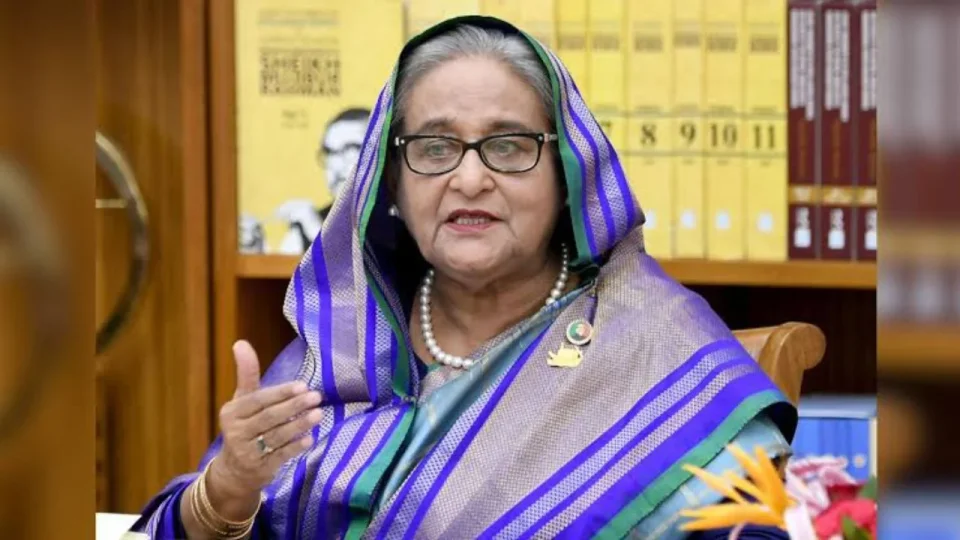
As Bangladesh's current regime turned down India's invitation to BRICS Summit in New Delhi, former Prime Minister Hasina Sheikh said the decision is "immature" and it went against Bangladesh's national interests. Hasina viewed the BRICS Summit as an opportunity to strengthen its economic and diplomatic ties, saying that foreign policy should not be driven by personal reactions or short-term political calculations.
Hasina argued that a responsible government should create opportunities for its people rather than close doors to international cooperation. New Delhi had invited Rahman to attend the summit on September 12 and 13 in his capacity as the current chair of the Bay of Bengal Initiative for Multi-Sectoral Technical and Economic Cooperation (BIMSTEC). However, the Bangladesh PM chose not to attend.
"It was deeply unfortunate that Bangladesh chose not to participate. In my view, it was an immature decision and one that did not serve Bangladesh's national interest," Hasina told PTI in an exclusive interview.
She said BRICS was more than a diplomatic gathering, as it brought together major emerging economies and offered opportunities for cooperation in trade, investment, infrastructure, technology and development. "By participating, Bangladesh could have gained valuable experience and opened new opportunities for its own economic and social development. That opportunity was lost," she said.
Hasina Questions Whether Her Presence In Delhi Influenced Rahman's Decision
Hasina questioned whether Rahman's decision to skip the summit was influenced by the fact that she is living in New Delhi. The 78-year-old former prime minister has been living in India since she left Bangladesh in August 2024, following the collapse of her government amid a mass anti-government movement."If my presence in New Delhi was the reason behind Rahman's refusal to attend the summit, it is very unfortunate," she said, arguing that relations between countries should not be determined by personal considerations or political sensitivities involving one individual.
Hasina recalled that former Bangladesh president Ziaur Rahman, Tarique Rahman's father, visited New Delhi in 1979 even though she was living in the Indian capital at the time. She also said she was in London when Ziaur Rahman visited the city in 1980. Referring to the political circumstances in which Ziaur Rahman came to power following the assassination of Bangladesh's founding leader, Sheikh Mujibur Rahman, and four other national leaders, Hasina said her presence in either city had not prevented him from travelling there.
"So why should my presence in Delhi prevent Ziaur Rahman's son, Tarique Rahman, from coming to India today? What is the real reason behind such a decision," she asked. "Relations between two countries cannot be determined by personal considerations or political sensitivities involving one individual," she added.
Hasina Defends Her Government's Foreign Policy
The Awami League leader also defended her government's approach to international relations, saying Bangladesh had maintained close ties with India while expanding cooperation with China, Russia, Japan, the United States, Europe and other partners. According to Hasina, maintaining friendly relations with one country should not require Bangladesh to become hostile towards another. She called for an independent, balanced and confident foreign policy guided by national interests rather than domestic political considerations."The principle given by the Father of the Nation, Bangabandhu Sheikh Mujibur Rahman, remains the best guide: friendship to all, malice to none. India is Bangladesh's closest neighbour and historic friend from the Liberation War," she said.
Hasina also described China as an important development partner and said Bangladesh needed to maintain constructive relations with Japan, the United States, Europe, the Association of Southeast Asian Nations (ASEAN) and the Muslim world. "The problem is not engagement with China or any other country. The problem begins when one relationship is used against another," she said.
She added that encouraging anti-India rhetoric for domestic political purposes and taking major decisions without transparency could undermine Bangladesh's interests.
India-Bangladesh Ties Face Fresh Strain
Relations between India and Bangladesh have faced renewed tensions following Hasina's virtual media interaction in New Delhi on August 5. After the event, Dhaka reiterated its demand for her extradition and sought to link the issue with Rahman's planned visit to India. New Delhi distanced itself from the interaction, stating that it had neither played a role in organising the event nor endorsed Hasina's remarks.
The dispute over Hasina's presence in India has remained a sensitive issue in bilateral relations, with the former prime minister's political future and the question of her return to Bangladesh adding to the tensions. Her latest remarks on Rahman's decision to skip the BRICS summit come against this backdrop of strained diplomatic ties and differences over the two countries' political and strategic interests.
Hasina Accuses Rahman Government Of Restricting Democratic Space
Hasina also launched a broad attack on the Rahman government's domestic policies, alleging that Bangladesh was going through a serious national crisis marked by restrictions on democratic freedoms, weakened law and order and political persecution. She claimed that the judiciary had been used for political revenge, media freedom had been restricted and minority communities felt unsafe. She also alleged that extremist forces had regained ground and that the economy had suffered.
These allegations were made by Hasina during the interview and were not independently established in the statements provided by PTI. "This is no longer only an Awami League issue. It is a national crisis. One of the country's largest political forces has been banned. Its leaders are in jail or forced into hiding," she said.
Hasina claimed that millions of Awami League supporters had been denied their normal political rights and argued that Bangladesh could not achieve lasting stability by excluding such a large section of the population from political life. She further alleged that thousands of people had been jailed and many others forced into hiding, while families had lost their homes, jobs, businesses and livelihoods because of their political affiliations. According to Hasina, restoring democratic participation and protecting political rights were essential to bringing stability back to Bangladesh.
Hasina Says She Will Return To Bangladesh To Restore Democracy
Hasina said she intended to return to Bangladesh as part of her effort to restore democracy, voting rights and the rule of law, but did not disclose any specific details about when or how she planned to return. "My return is part of the struggle to restore democracy, voting rights and the rule of law. I want to stand beside the people of Bangladesh, fight for their rights, and help restore democracy, security and development in my country," she said.
She called for a free, fair and inclusive election through which the people of Bangladesh could decide their country's future. "The people of Bangladesh must be allowed to decide their own future through a free, fair and inclusive election. That is why my return will be significant. It will be a step towards returning Bangladesh to its people," she added.
Her remarks signal her intention to remain politically active despite being outside Bangladesh and facing legal proceedings in the country.
Hasina Says She Is Not Afraid Despite Death Sentence
Hasina acknowledged that returning to Bangladesh could put her at risk, particularly as a Bangladeshi court has sentenced her to death. However, she said she was not afraid of the consequences. She referred to the assassination of her father, Sheikh Mujibur Rahman, her mother and several other members of her family in 1975. She also recalled returning to Bangladesh in 1981 despite military rule and intimidation.
The former prime minister cited previous assassination attempts, including the grenade attack of August 21, 2004, as well as imprisonment and political persecution, as experiences that had shaped her resolve. "This is not the first time death has come close," she said.
Hasina argued that the larger issue was the state of justice in Bangladesh rather than her personal safety. She alleged that the death sentence against her had been imposed through a politically motivated process in which she had not received a genuine opportunity to defend herself.
"A death sentence imposed through a politically motivated process, without a genuine opportunity to defend oneself, cannot be called justice," she said. Her proposed return, however, remains uncertain, with no specific timeline announced in the interview.