North Korea Bridge Puts China’s Strategic Stakes Back in Focus
China and North Korea will open the long-delayed New Yalu River Bridge, aiming to boost trade and strengthen bilateral ties amid Russia’s growing influence.
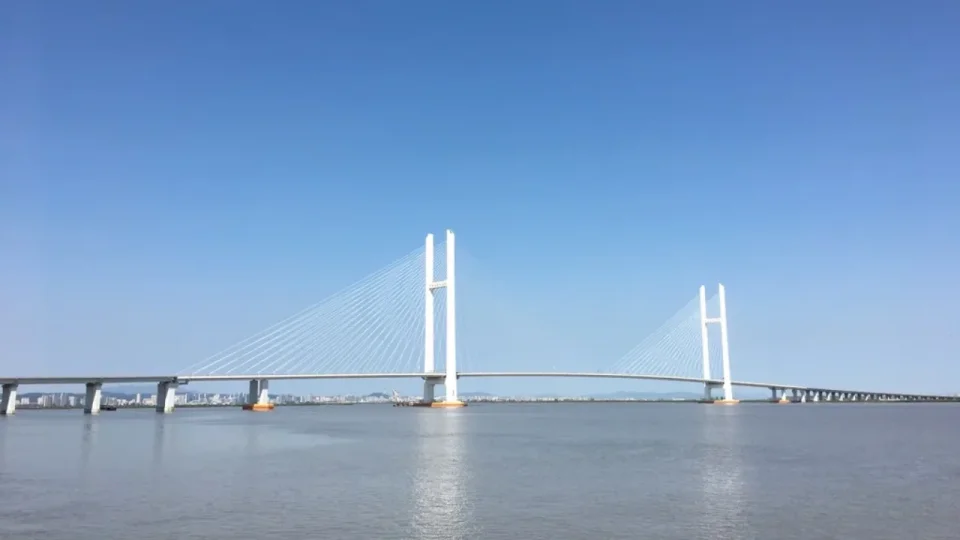
The bridge between China and North Korea, which was stalled for opening for more than a decade, is ready for traffic on Thursday with both sides holding a ceremony for inauguration. The long-delayed project could strengthen economic ties between the two neighbours as Pyongyang seeks to revive its economy and Beijing looks to maintain its influence over North Korea.
The bridge is expected to improve the movement of goods and vehicles across the border, easing pressure on an ageing bridge that currently carries a large share of official trade between the two countries. Its opening also comes at a time when North Korea is strengthening its ties with both China and Russia, giving the development wider regional significance.
A Decade-Long Delay
Originally, the bridge was set for 2014 as China had completed all the work on its from from access roads to customs facilities. But the deadline was passed without North Korea having done any work on its side. The non-responsive behaviour from North Korea triggered frustration among residents of Dandong as they had expected the new connection to generate economic activity and improve cross-border trade. China's state-affiliated Global Times reported on the concerns at the time.
But North Korea's lack of interest was not entirely unaccounted. At the time, North Korea was concerned about becoming too economically dependent on China, particularly as Beijing supported United Nations sanctions targeting Pyongyang's nuclear programme. Analysts believed that this triggered differences between the two countries as the bridge's location was also cited as a possible factor.
The prolonged delay highlighted the complexities of the relationship between the two neighbours, despite their geographical proximity and longstanding political ties.
An Important Route for Bilateral Trade
Despite North Korea's isolation, China has long been its largest trading partner and its most important economic lifeline. According to figures cited in recent analysis, about 98 per cent of North Korea's external trade was with China.
The existing bridge between Dandong and Sinuiju, built in 1937, carries both railway and road traffic. However, vehicles can cross only in one direction at a time, limiting its capacity to handle growing transport requirements.The new bridge is expected to ease this bottleneck by providing a wider route for vehicles, containers and heavy cargo trucks. It could gradually improve the efficiency of cross-border trade and reduce logistical constraints for businesses operating along the frontier.
Chinese Foreign Ministry spokesperson Mao Ning said on Wednesday that the bridge would promote economic, trade and people-to-people exchanges between the two countries. She described China and North Korea as friendly neighbours connected by rivers and mountains, calling the project an important link between them.
However, the bridge's opening does not necessarily mean that trade will rise sharply in the immediate future. A recent report by Gyubeom Kim, an expert at South Korea's state-run Institute for National Security Strategy, suggested that Beijing would take Pyongyang's interests into account while managing the expansion of trade.
North Korea could also increase exports of processed goods, food products, cosmetics and alcoholic beverages to China, according to Kim.
China Seeks to Maintain its Influence as North Korea Moves Closer to Russia
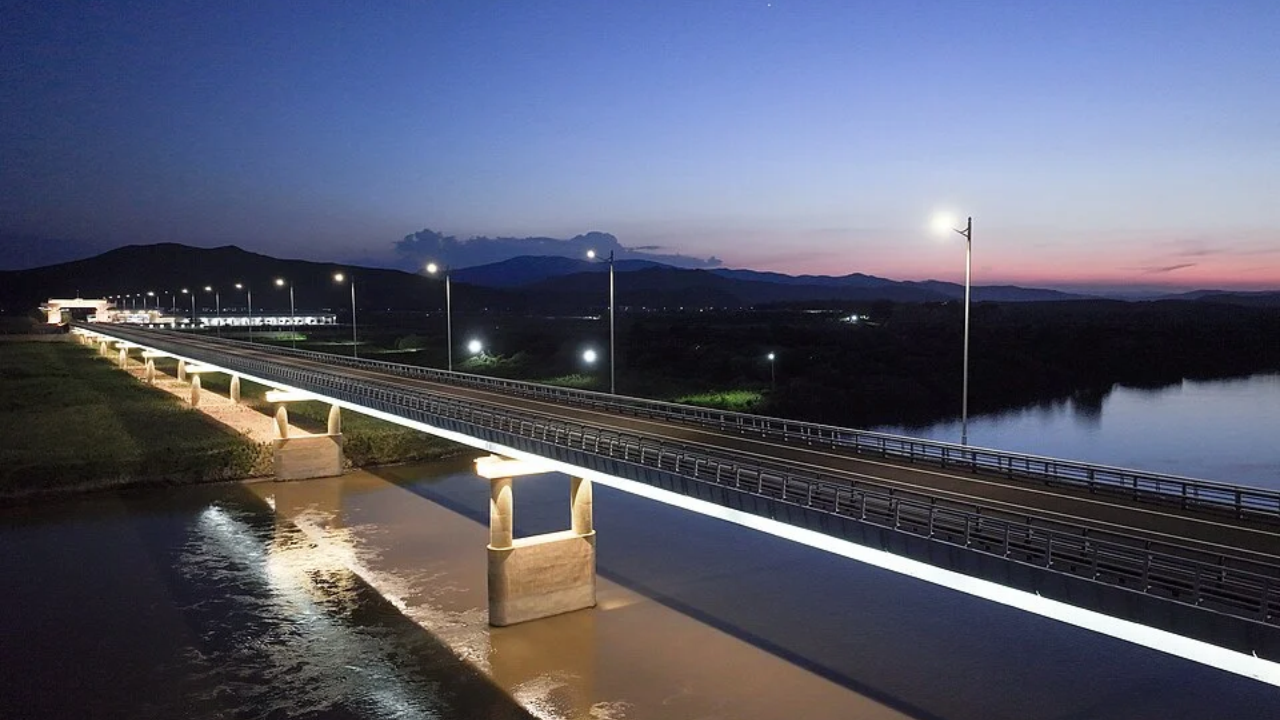
The opening of the bridge comes at a significant moment in North Korea's foreign relations. Last month, North Korea and Russia opened a road bridge about one kilometre long across the Tumen River as part of their efforts to strengthen bilateral ties. The Russian government said the crossing would allow up to 300 vehicles to pass daily through a newly built border checkpoint.
The development has drawn attention to Russia's growing relationship with North Korea, which has supplied Moscow with troops and conventional weapons to support its war in Ukraine. Pyongyang is believed to be seeking military and economic assistance in return. Against this backdrop, the new China-North Korea bridge could help Beijing reinforce its position as Pyongyang's principal economic partner. The bridge is considerably larger than the new Russia-North Korea crossing and is expected to accommodate two-way traffic, including heavy freight vehicles.
North Korea's expanding relationship with Russia does not necessarily mean that it is moving away from China. Instead, Pyongyang appears to be seeking stronger ties with both countries to secure economic assistance, military support and greater diplomatic room for manoeuvre. For Beijing, maintaining close relations with North Korea remains important as it seeks to preserve its influence in the region and counter US strategic interests.
Xi Jinping's Visit Raised Expectations
The opening of the bridge has been anticipated since Chinese President Xi Jinping visited Pyongyang in June and met North Korean leader Kim Jong Un. During the meeting, Xi expressed China's willingness to expand cooperation with North Korea in areas including trade, agriculture, construction and technology. Kim, in turn, described ties with Beijing as a top strategic priority.
The bridge provides a tangible link between those diplomatic commitments and economic cooperation on the ground. Its opening could facilitate trade and strengthen the infrastructure connecting the two countries. However, the extent of its impact will depend on how quickly North Korea develops the supporting infrastructure on its side, how much cross-border trade expands and how Pyongyang balances its relationships with Beijing and Moscow.
For now, the bridge's opening marks an important step in restoring momentum to China-North Korea ties after years of delay. More broadly, it reflects Beijing's efforts to retain its economic and strategic position in a region where Russia has also been working to deepen its influence.