‘Never Feared Competition’: Reliance Responds to Musk’s Starlink India Allegations
Reliance Industries has said it welcomes competition from Elon Musk’s Starlink as both companies await government clearance to launch satellite internet services in India.
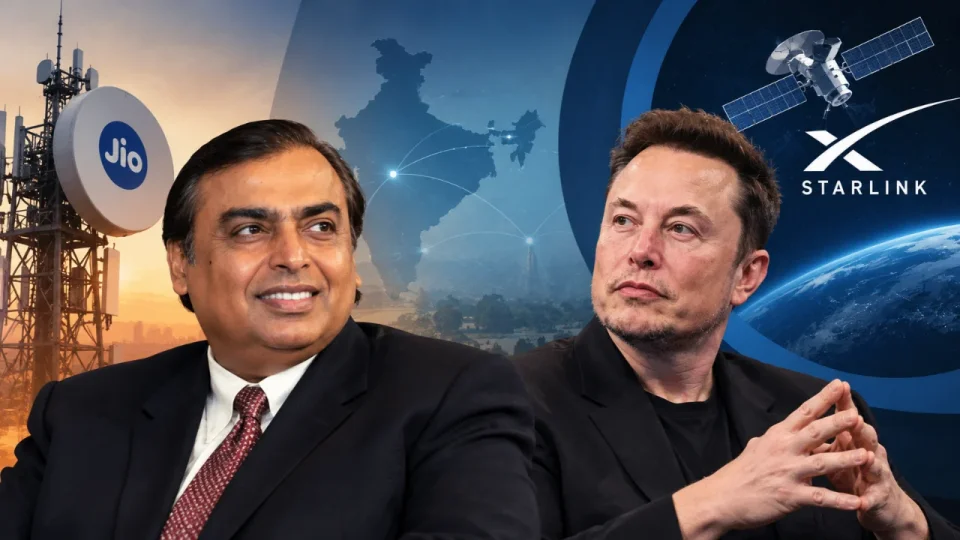
Reliance Industries Ltd (RIL), led by Indian billionaire Mukesh Ambani, has said it welcomes competition from Elon Musk’s Starlink, in its first response to allegations that Ambani was trying to delay the satellite internet service’s entry into India. The company also said that its own satellite internet services, operated through Jio, were awaiting the necessary government clearances.
In a statement issued on Friday, Reliance said it had never feared competition and sought to clarify its position amid the ongoing dispute over Starlink’s proposed launch in India. Although the statement did not name Musk, it addressed remarks made about the company and the Indian market.
"We welcome competition in satellite communications, including Starlink. Every player, Jio included, must serve the people of India and abide by the laws and policies of the land," read the statement.
Statement from Reliance Industries In light of recent remarks about Reliance and the Indian market, we wish to place the facts on record. Like every Indian enterprise, Reliance has grown in an India that welcomes investment and innovation, homegrown or international, that improve the lives of the people. That openness rests on the rule of law. As the Government of India has stated, it applies the same process to every applicant, Indian or foreign. Jio's own satellite services await clearances. At Reliance, we have never feared competition. We see it as the truest test of who serves the customer best. Jio itself entered India's crowded telecom market in 2016 as the newest player, with not a single customer. In just ten years, Jio has earned the trust of over 530 million customers and given Indians some of the best digital infrastructure and most affordable data in the world. We welcome competition in satellite communications, including Starlink. Every player, Jio included, must serve the people of India and abide by the laws and policies of the land.
— Reliance Industries Limited (@RIL_Updates) October 16, 2026
Musk Alleges Bias, India Denies
Musk, the world’s richest man, has repeatedly accused the Indian government and Ambani of holding up Starlink’s entry into the country. His posts on X have included references to Ambani as the “real boss” of India and “Prime Minister Ambani”, questioning whether Starlink would be allowed to compete with Reliance’s telecom business.
Dear Prime Minister Ambani, Please accept my humble apologies for not realizing that you are the real boss of India. Naturally, you would prefer to maintain your monopolistic exploitation of the great people of India, but would you nonetheless consider allowing Starlink to compete? There are many areas of India, as there are in all countries, with no Internet access, which denies children the opportunity for education and for small businesses the opportunity to sell their goods to a global market. Starlink would change their lives for the better. Thank you 🙏
— Elon Musk (@elonmusk) October 9, 2026
India, however, has denied favouring any company in the approval process.
The dispute comes at a significant time for Reliance, as Jio Platforms, the group’s digital services arm, prepares for a proposed initial public offering (IPO) that could value the business at $108 billion. The IPO is expected to be the largest in India’s history.
Jio, which operates Reliance’s telecom business, has more than 530 million customers and is a major player in India’s internet market. Its satellite internet services could place it in direct competition with Starlink once both companies receive the necessary approvals to begin operations.
India’s Satellite Internet Plans Await Clearance
India has granted licences to Starlink, Jio’s satellite internet business and Eutelsat OneWeb, which is backed by the Bharti Group, to provide satellite-based internet services. However, the companies are still awaiting the required security clearances to launch their services commercially.
Satellite broadband is expected to expand internet access in India, particularly in rural and remote areas where conventional broadband infrastructure is difficult or expensive to establish. Millions of people who remain without reliable internet access could benefit from the technology.
Musk has said Starlink would offer affordable services in India, where low-cost data has played a major role in expanding internet use. Reliance’s Jio disrupted the domestic telecom market by introducing inexpensive data plans, helping it build a customer base of more than 530 million users.
Starlink has adopted a similar approach in other markets, including Kenya, where it has sought to challenge established telecom operators.
Musk’s criticism of Ambani marks a notable shift in the public exchanges surrounding Starlink’s India launch. The remarks have also drawn attention because Musk has maintained a warm public relationship with Prime Minister Narendra Modi, while India continues to seek foreign investment and negotiate a trade agreement with the United States.
With both Reliance and Starlink seeking entry into India’s satellite internet market, the eventual launch of their services could intensify competition in a country with more than a billion internet subscribers. However, neither company can begin commercial operations until it secures the necessary government approvals.